
Dubai F&B group halves bookkeeping time with tofu
11,000 documents in 13 weeks
Two entities, six users, more than 60,000 line items coded. 96% of it reaches Xero with no re-keying.
Headquarters: Dubai, United Arab Emirates
Leadership: Ashish Gupta, Director of Finance. Lavoya Restaurants Group is led by co-founder and CEO Walid Hajj and operates as the restaurant arm of Veda Holding.
Brands: Joe & The Juice, Dave's Hot Chicken and Barbar, operated under franchise across the GCC
Operations: Outlets across the UAE, Qatar and Saudi Arabia, with roughly twelve new openings a year as described by the company
Size: A ten person in-house finance team, with six user seats on Tofu. Bookkeeping is kept in house rather than outsourced.
Software stack: Xero, with every brand and branch set up as a tracking category. Inventory is kept outside the ledger, with monthly stock counts posted in. Tofu for document extraction and coding.
Services: Multi-brand restaurant operation and franchise development across the GCC
We have tried other OCRs, but nobody has built it to this precision.

"Nobody has built it to this precision"
Ashish Gupta had tried other OCR tools before. Reading the invoice was never the hard part.
99.98% tagged to the right branch
Every brand and branch is a tracking category. Tofu learns the mapping from the team's own knowledge cards, 91 of them and counting.
Two entities live, three to come
The second went live in July on rules that already existed. In one month it hit the volume the first took two months to reach.
Ashish Gupta has implemented systems like SAP, Oracle, Microsoft Dynamics.
Then he built the finance system for a fast growing restaurant group on none of them.
That looks strange for about ten seconds. Then he explains it.
"ERP is good for the bigger industries," he says. Oil and gas. Heavy distribution. Not food. Put a restaurant group inside one and the nights disappear into matching stock counts and passing adjustments. Operations productivity goes half instead of increasing with use of big ERPs that have too many controls and procedures.Half of the team is just occupying their time in raising the POs or this reports. It doesn't make sense."
So he did the opposite of what his CV suggested. He kept the ledger clean and the inventory outside it. Stock is counted every month, the variance falls out of the system, and no garbage ever reaches the books.
"I am an accountant," he says. "I keep it simple."
Simple is harder than it sounds. We will get to why.
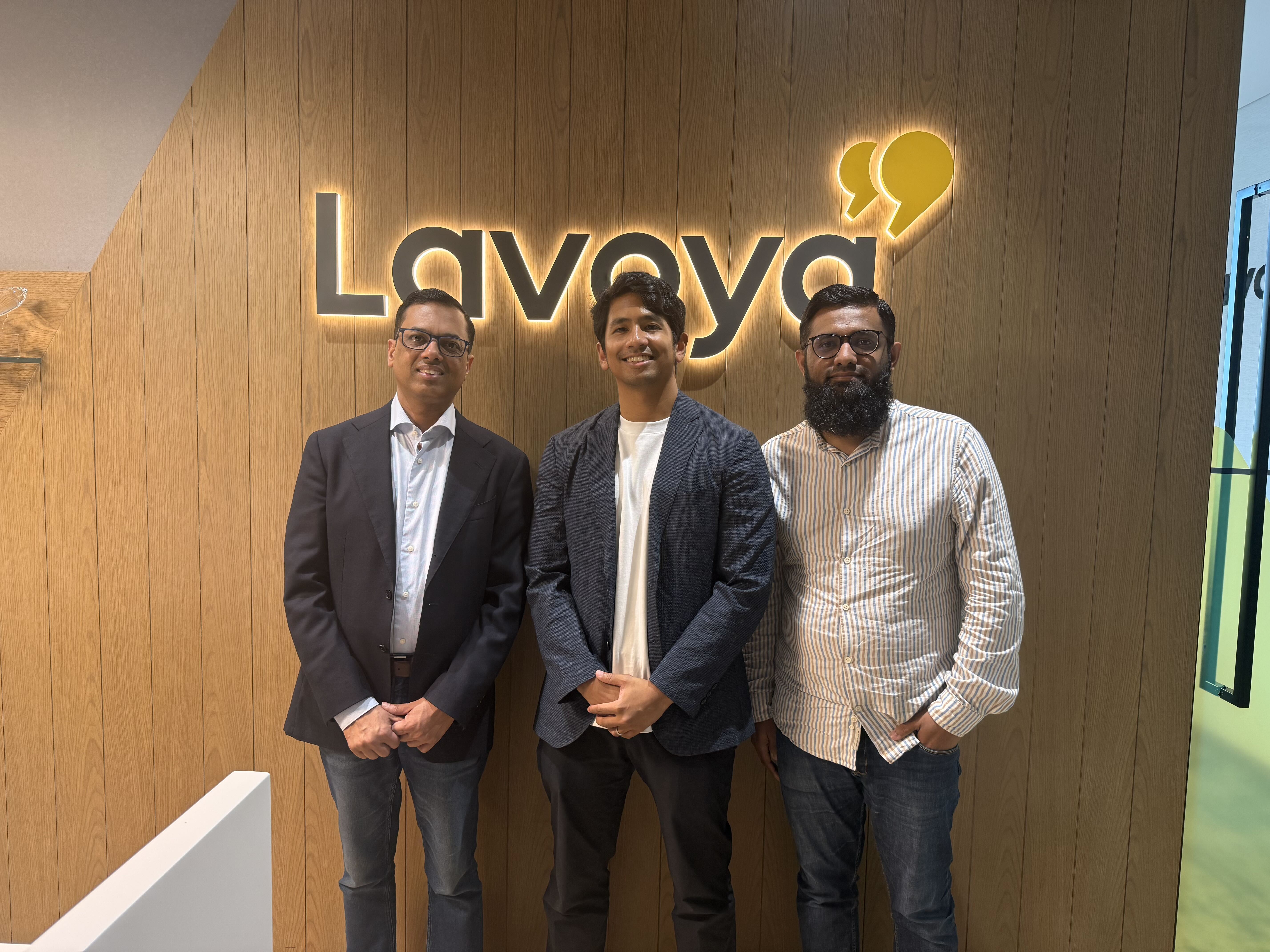
The group he keeps the books for
Lavoya is a Dubai restaurant operator. It brought Joe & The Juice to the UAE, then Dave's Hot Chicken, then the Lebanese street food brand Barbar and latest addition, Em Sherif Deli. New doors keep opening.
Gupta puts the plan at roughly twelve new outlets a year, across the UAE, Qatar and Saudi Arabia.
Ten people run the finance function for all of it.
Ten people, three countries, dozens of doors. No outsourcing. He was asked whether he would send the work offshore and the answer came back before the question landed.
"Outsourced" means you have to go on robo mode. Which I don't prefer."
That is a choice with a cost. Every one of those doors sends invoices. Milk arrives daily. Produce arrives daily. The paperwork arrives with it.
The problem was never reading the invoice
Here is where most people assume the story goes. Restaurant group drowning in paper, needs a scanner, buys a scanner, the end.
Not this story.
"The major challenge what we were facing, it's not the translation, OCR," Gupta says. "Mainly to tag the brand and the branches."
Read that again, because it is the whole thing. A machine that reads an invoice gives you a number. A number with no branch on it is worthless to a group like his. The Marina store and the Mall of the Emirates store buy from the same dairy supplier on the same day. If both invoices land in the ledger as "dairy," nobody can tell which store is bleeding.
His ledger is built to answer that. Every brand and every branch is a tracking category in Xero. He has been on Xero since before most of the region had heard of it, a certified advisor for seven or eight years now.
The ledger was ready. The bills were not.
Everything he tried could read. Nothing could tag.
He tried OCR tools. More than one.
He tried an inventory app that had added AI. That one came closest, and then stopped at the same wall: it could pin one brand by default, and after that a human had to sort it out.
"But branches keep on moving," he says.
That is the sentence that kills rule based software in a growing company. A rule is a photograph. His business is a film.
So he lived with it. Bills got read. People still did the thinking. For a group opening a door a month, that is a tax that grows every quarter.
What changed
Tofu came in on 16 June 2026.
The difference is not the reading. It is that Gupta's team can teach it. Instead of settings, they write knowledge cards: short instructions in their own words about how this group keeps its books.
Map this mall's trading name to that tracking option. Pin this supplier's tax registration number, and never mistake it for our own. Charge this one at five percent inclusive, that one exclusive, and treat foreign currency invoices as reverse charge. Split utility bills into electricity and water. Keep consumables, food and packaging apart, down to the wax paper.
Ninety one of those cards are live today.
That is the part worth pausing on. Nobody at Tofu wrote those cards. His team did, in a language closer to a handover note than a configuration screen. The knowledge that used to live in the head of whoever had been there longest now sits in the system, and the system applies it at three in the morning without being asked.
"Now it is just a click away," he says.
He has a theory about where the accuracy comes from. When he learned that the engineering team sits in Tokyo, it fit something he had already noticed.
"I can feel the Japanese precision in your product," he said. "This is what we wanted."
We have tried other OCRs, but nobody has built it to this precision.
The numbers, checked
Thirteen weeks in, this is what the platform shows for Lavoya:
- More than 11,000 documents processed since 16 June, across two live entities.
- 96% pushed through to Xero, more than 10,700 bills, with no re-keying.
- More than 60,000 line items coded on verified bills.
- 99.98% of those lines carry a brand or branch tag, across 43 tracking options and 26 accounts. Branch level reporting, produced as a by-product of the bookkeeping.
- 56% of bills split out of batched PDFs automatically, more than 6,200 of them, without anyone drawing a box.
- Volume up every full month: about 3,400 documents in July, about 3,900 in August.
- Six users today, up from two on day one.
Gupta's own measure is shorter than any of that.
"We are very happy with the performance. It has improved a lot with Tofu. We are saving, I think, half of the time now."
The second entity is the proof
The first entity working is a pilot. A second entity working is a system.
Lavoya's second entity went live on 28 July. It did not need a new project, a new vendor or a new set of rules, because the rules already existed. It reached in one month the volume the first entity took two months to reach.
Three more group entities are still to come.
What he wants next
He has already asked for it.
Gupta wants the purchase data that Tofu is reading anyway to come back to him as analysis: what was bought, from which supplier, at what price, in which month, at which location. He does not have inventory data sitting in a system, by design, because he refused to put it there. The invoices are the only complete record of what the group buys.
"If we get additional inventory data it will be very helpful for us to do pricing analysis, quantity analysis, location wise."
Then, in the same breath, the line that tells you he means it: "We are willing to pay also for that."
His team has shaped the product in smaller ways too. A control they asked for, to tidy source documents before anything counts against extraction volume, came straight out of their feedback.
Which brings it back to where he started. He did not want a bigger system. He wanted a simpler one that could be taught.
"Volume will keep increasing," he says. "I don't see any limit to volume."
Neither do we.