SunTao Lai
May 11, 2026


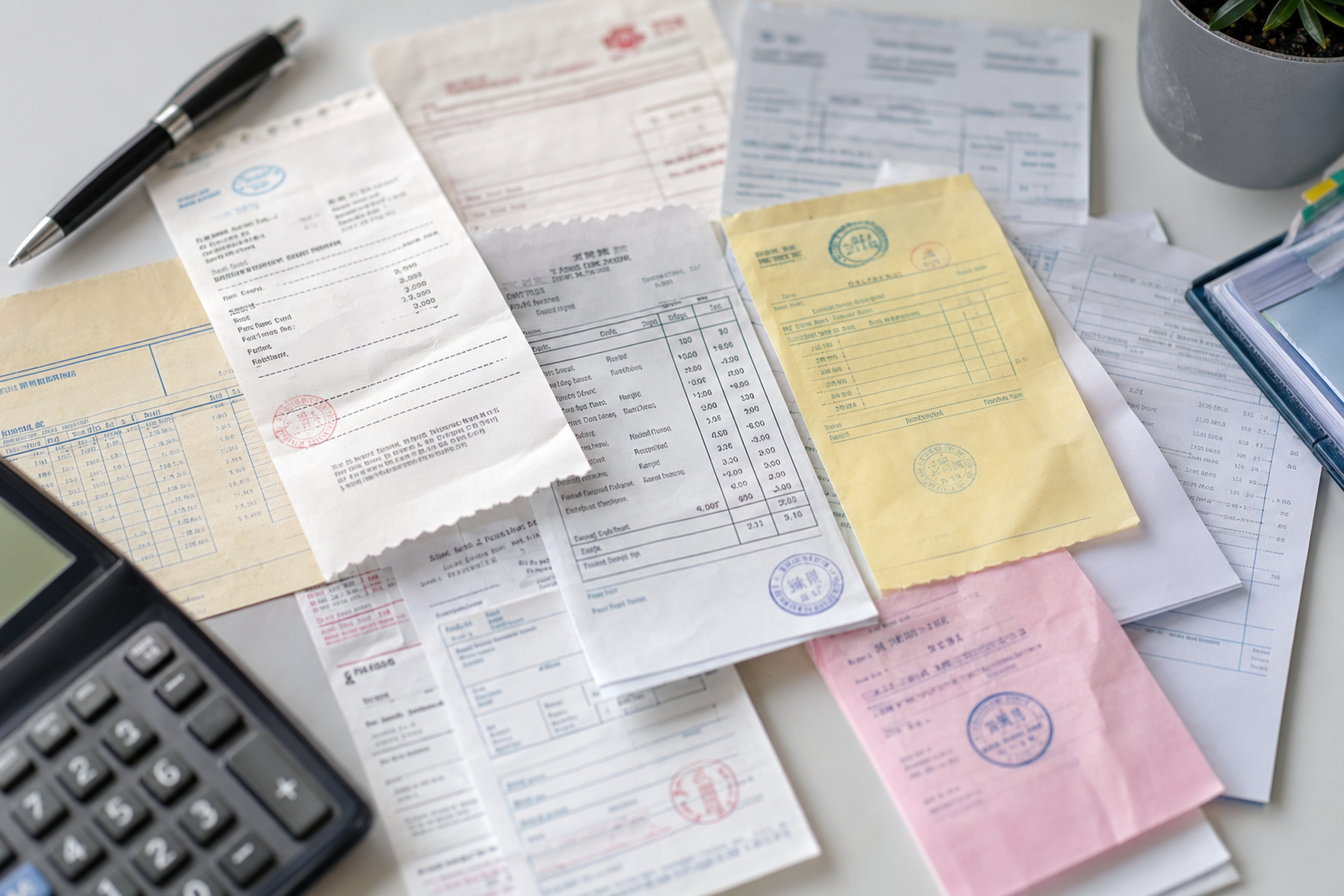
Most OCR tools work great until you upload a Malay receipt. Then they extract the header but miss every line item, or they just fail completely and leave you typing. Automated bookkeeping software that handles Malay receipts needs to read Bahasa Melayu as accurately as English, especially when documents mix languages on the same page. Malaysian firms deal with this every single day, so a tool that can't handle it just adds friction instead of removing it.
TLDR:
Automated bookkeeping software that handles Malay receipts reads, extracts, and codes financial documents written in Bahasa Melayu without you needing to translate anything first. In Malaysia, accounting records and financial statements are legally maintained in Bahasa Melayu or English. Any tool that fails on Malay text creates a real gap for firms serving Malaysian clients.
The complication is that Malaysian documents rarely arrive in a single language. One invoice might mix Malay, English, and Chinese characters across the same page. Legacy OCR tools choke on that combination. Software built for multilingual documents handles extraction automatically, without requiring you to sort, relabel, or translate documents before uploading them.

Each tool was ranked based on publicly available information, including product pages, documentation, and app store listings. No internal tests were run on competing software.
We looked at five areas:
Tofu sits at the top of this list for one straightforward reason: it was built to handle documents in multiple languages, including Malay, from the ground up.
Upload a Malay receipt and Tofu extracts every line item, maps it to your chart of accounts, and publishes directly to your accounting software. No manual re-typing, no reformatting, no workarounds.
A few things separate Tofu from general-purpose tools here:
"What used to take me 3-4 hours can be done in 30-60 minutes." - Tammy Tan, Klozer
That kind of time saving reflects what happens when a tool actually reads the documents you're processing, instead of failing on anything outside a Latin alphabet.
Tofu connects directly with Xero and other major accounting software, so once extraction is done, publishing takes seconds. The AI also remembers how you've coded things before, which means your chart of accounts stays clean without constant supervision.
Vic.ai automates accounts payable for internal finance teams at mid-market and enterprise companies.
There are a few things worth knowing about what the product actually covers.
Good for: Mid-size to enterprise businesses processing large invoice volumes who want to cut manual AP work through autonomous processing.
Limitation: Vic.ai claims 99%+ accuracy across languages and formats globally, but there is no evidence it processes Malay-language receipts or supports the multi-entity workflow accounting firms need when managing dozens of client books.
Bottom line: Built for a single company's AP department, not accounting firms juggling multiple Malaysian client entities.
Booke.ai uses GPT-4 and robotic process automation to automate transaction categorization, bank reconciliation, and client communication for accounting firms.
Good for: Firms managing multiple clients who want affordable, automated categorization and reconciliation.
Limitation: No documented support for Malay-language receipts or handwritten documents common in Malaysian transactions.
Bottom line: Solid for QuickBooks-heavy workflows, but lacks the verified multilingual and handwriting capabilities Malaysian firms need.
EzzyBills automates invoice extraction with line items and GL codes, handling scanned invoices, PDFs, and photo snaps for both AP and AR workflows.
Good for: Firms in Australia, Canada, Ireland, New Zealand, Singapore, South Africa, the UK, and USA using Xero or MYOB who need line item extraction.
Limitation: EzzyBills serves specific English-dominant geographies and has no documented support for Malay language processing or non-English Asian receipts common in Malaysian bookkeeping.
Bottom line: Works well for English-language invoice processing with Xero, but Malaysian firms processing Malay receipts need verified multilingual extraction that EzzyBills hasn't shown it can deliver.
DOKKA is a document management and bookkeeping automation tool built for accounting firms. It extracts data from invoices and receipts, then publishes to connected accounting software like Xero and QuickBooks.
For Malaysian firms, DOKKA handles multi-language documents to a degree, but its language support skews toward English and European scripts. Malay receipts, particularly those mixing Bahasa Melayu with Chinese or Tamil text, can produce inconsistent extraction results depending on document quality and layout.
Pricing sits at the higher end of the market, which makes it harder for smaller Malaysian bookkeeping practices processing moderate document volumes to make the cost work.
Veryfi is a receipt and invoice capture tool aimed at accounting teams that need quick data extraction across multiple document types. It reads vendor names, totals, dates, and line items, and it connects to accounting software like QuickBooks and Xero.
For Malay receipts, Veryfi can read documents written in Bahasa Malaysia, though accuracy on mixed-language receipts (where Malay and English appear together) can vary. Teams processing high volumes of Malaysian documents may find they need to manually review and correct more entries than expected.
Pricing starts at a per-document rate, which can add up quickly for busy bookkeeping practices.
Here's a side-by-side look at how each tool stacks up across the features that matter most for Malaysian firms.
| Feature | Tofu | Vic.ai | Booke | EzzyBills | DOKKA | Veryfi |
|---|---|---|---|---|---|---|
| Malay language support | Yes | No evidence | No evidence | No evidence | No evidence | No evidence |
| Line item extraction | Yes | Yes | Yes | Yes | Yes | Yes |
| Handwriting recognition | Yes | No | No | No | No | Yes |
| Zero-configuration setup | Yes | No | No | No | No | No |
| Multi-entity management | Yes | No | No | No | Limited | No |
| Starting price | $79/month | Custom | $20/client | £66/month | $400/month | Custom |
| Xero integration | Yes | Yes | Yes | Yes | Yes | No |
| QuickBooks integration | Yes | Yes | Yes | No | No | Yes |
The Malay language support row is the one that narrows the field fast. Every tool on this list handles line item extraction in some form. Only Tofu has verified support for Malay-language documents.
Malaysian bookkeeping rarely comes in one language. One client sends a Malay receipt, the next sends a Chinese invoice, the next sends a handwritten slip mixing English and Bahasa. Tofu reads all of it without language selection or setup.
The zero-configuration AI learns from your existing accounting history and applies that knowledge forward. No rule builders, no per-supplier templates to configure. Each correction you make trains the system, so the same vendor gets coded correctly every time after that.
Here is what you get that other tools on this list do not offer:
The others on this list were built for Western markets and stretched toward Asia. Tofu was built with multilingual Southeast Asian documents in mind from the start, which is a real difference when your inbox has Malay GST receipts sitting next to handwritten delivery slips.
If your firm processes Malay receipts alongside English and Chinese documents, you need automated bookkeeping software that handles Malay receipts without choking on the language mix. Generic OCR tools fail here because they were built for single-language markets. Your documents arrive in whatever language your clients use, and your software should keep up without making you translate or reformat first. Test it with your receipts and watch it extract line items across languages in one pass.
Tofu handles mixed-language documents without requiring you to sort or label them first. One batch can include Malay receipts, Chinese invoices, and English bills, and Tofu extracts all of them automatically.
Start by checking if the tool actually supports Malay-language documents with verified examples, not claims alone. Then confirm it extracts line items (totals alone are not enough) and integrates with your accounting software. Price matters less than whether the tool works on the documents you actually process.
Most tools fail on handwritten documents completely. Tofu reads handwritten receipts in Malay and other languages, which matters for Malaysian firms where handwritten delivery notes and petty cash slips are common.
Header-only capture reads supplier name, date, and total amount; you still type every individual line. Line item extraction reads description, quantity, unit price, and account code for each line on the invoice, so nothing gets typed manually.
If you're manually re-typing Malay documents because your current tool can't read them, or if you're spending more than 3-4 hours per client on invoice entry, it's time to switch. The time saved in the first month typically covers the software cost.