SunTao Lai
May 28, 2026

Most vendors advertise AI bookkeeping accuracy claims that sound great until you process your first batch of real client documents. A vendor quotes 98% accuracy, but your review queue is still full because their system can't learn your chart of accounts or handle anything beyond standard invoices. The accuracy stat they're selling you measures character recognition, not whether your entries are correct. This post walks through what accuracy actually means in three different layers, which documents still need your eyes on them, and the one question that tells you whether a vendor is showing you real performance or a curated demo.
TLDR:
When AI bookkeeping vendors quote accuracy rates, they rarely specify what they're measuring. A system can claim 99% accuracy on character recognition while still miscategorizing dozens of transactions per month. Those are different things, and the gap between them is where accounting errors happen.
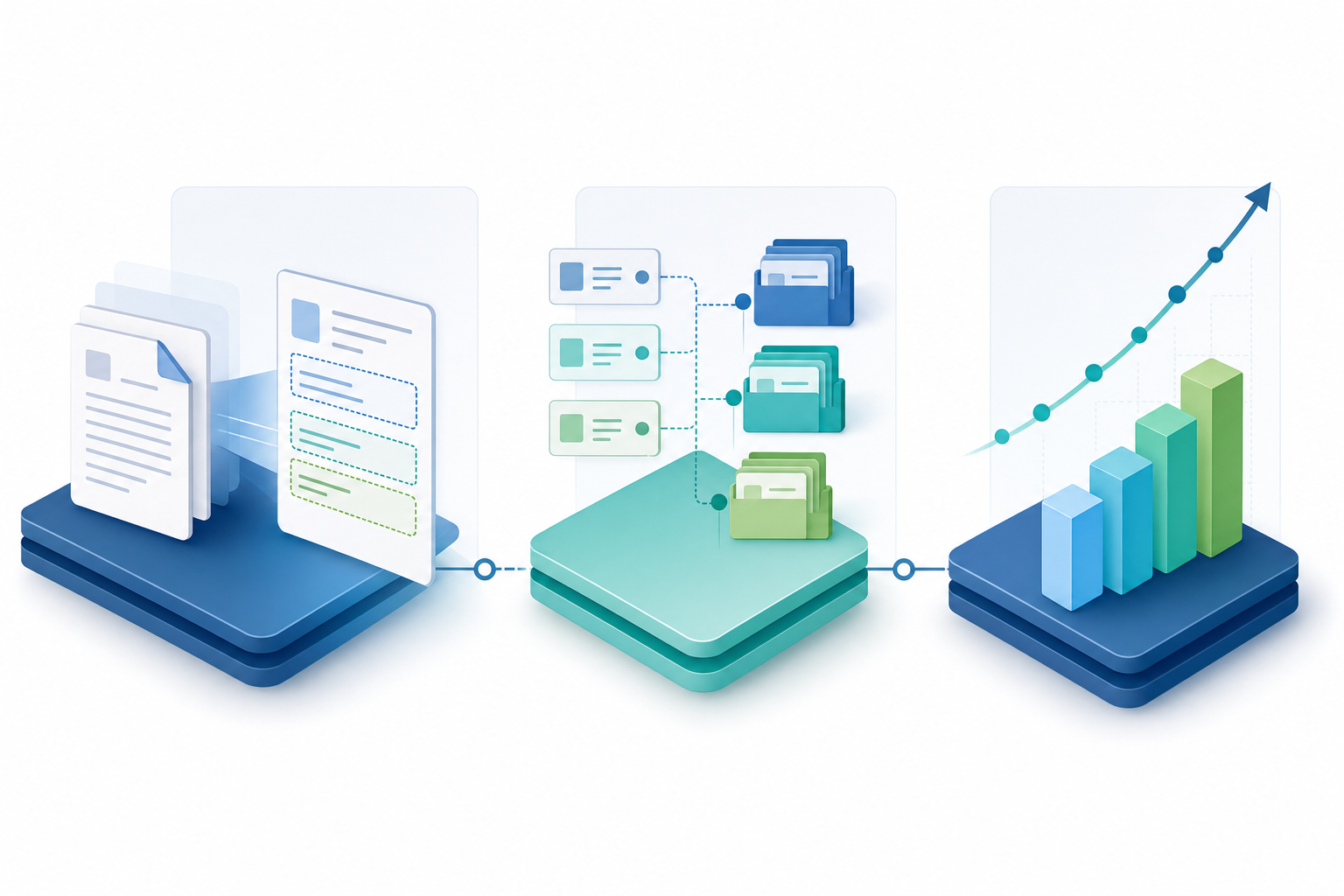
There are at least 3 distinct layers of accuracy worth separating out:
Most vendor benchmarks only measure the first layer. Extraction is the easiest problem to solve, and the least useful one to optimize in isolation. A firm that gets every number right but codes them wrong still has a reconciliation problem.
Consider a firm processing 5,000 transactions per month. At 99% accuracy, that's 50 errors. At 95%, it's 250. Depending on transaction values, a handful of those could materially affect a client's financials. The question isn't whether the AI is accurate in aggregate. It's whether your review process catches what it misses, and how much time that review actually takes.
Field-level and coding accuracy are the two types vendors will discuss if you push them. The third — learning accuracy — is the one that rarely appears on a spec sheet, and it's the one that most determines whether the AI saves your team time after the first month.
The type vendors rarely mention is learning accuracy. A high out-of-the-box extraction rate sounds good on a spec sheet, but if the system keeps making the same mistakes, your team keeps fixing them.
Firms running high document volumes see accuracy problems compound quickly. A 2% error rate across 5,000 invoices per month means 100 manual corrections, minimum. If those errors cluster in coding instead of field extraction, the fix takes longer and carries higher risk of misreporting.
Understanding which type of accuracy a vendor is quoting helps you ask the right questions during evaluation, not after go-live.
Expecting 100% accuracy from any bookkeeping platform sets you up for disappointment.
Human bookkeepers make errors too. Studies show manual data entry carries an average error rate of 1%, which sounds small until you're processing thousands of transactions a month.
The better question is: accurate enough for what purpose, and with what oversight in place?
AI bookkeeping accuracy should be measured against a practical standard, not a perfect one. There are a few ways to think about this:
Three scenarios show where AI bookkeeping accuracy holds up and where it doesn't.
This is where AI performs best. When the same supplier sends the same invoice format monthly, AI accuracy rates can exceed 99%. The system learns coding patterns over time, and there's little ambiguity for it to get wrong.
New vendors, handwritten receipts, and non-standard layouts stress-test AI systems. Accuracy can drop to 85-90% here, meaning your team still needs a review layer for unfamiliar documents.
Invoices with dozens of line items, mixed tax rates, or foreign currencies are where errors cluster. A single misread line can cascade into a reconciliation headache at month-end.
AI bookkeeping platforms don't arrive fully calibrated. They arrive trainable.
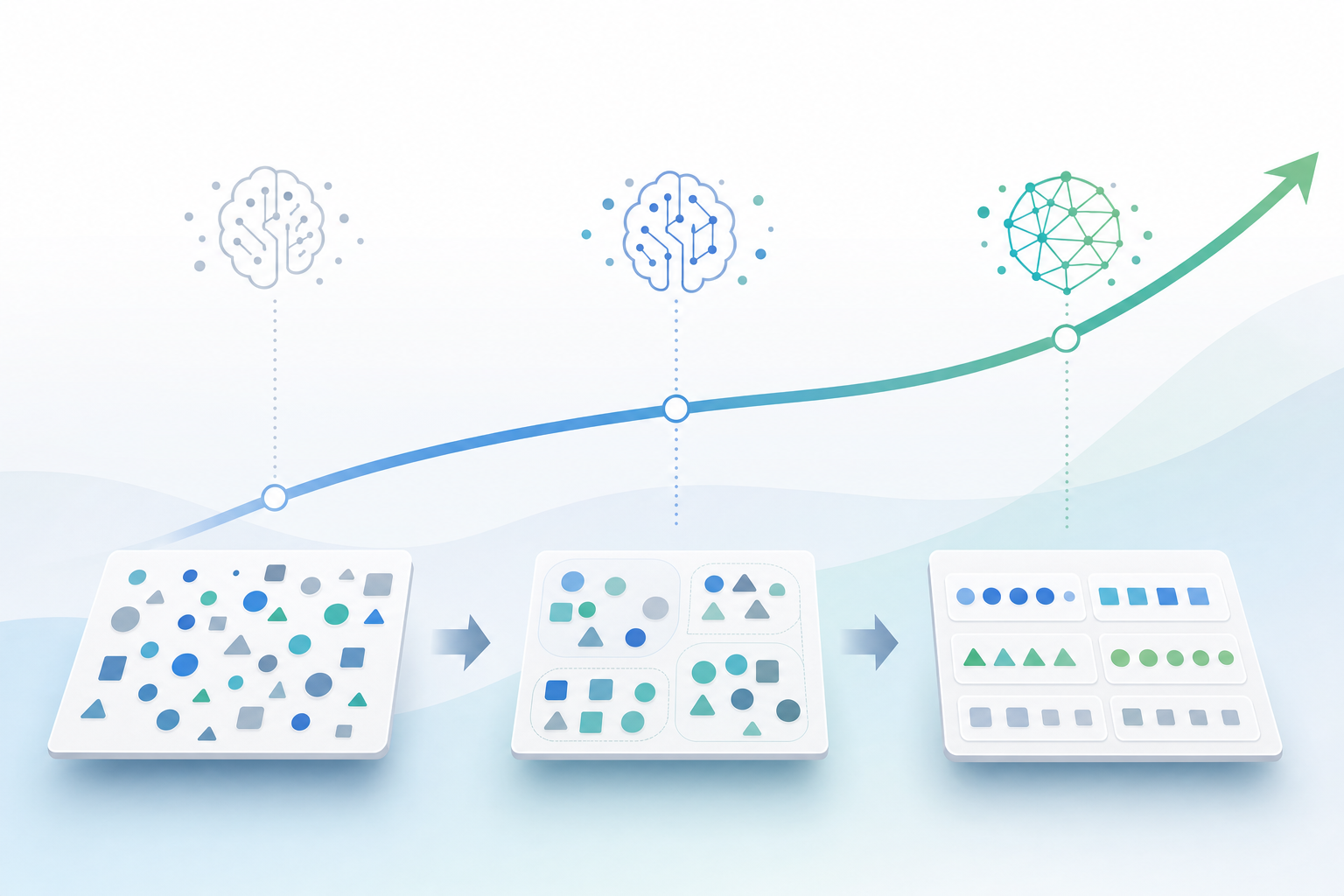
This happens because most AI bookkeeping systems learn from confirmed coding decisions. Every time a reviewer accepts or corrects a transaction, the model updates its confidence for that supplier, category, and account code combination.
The improvement follows a recognizable pattern across most firms:
The practical implication: testing AI bookkeeping accuracy at week one produces a misleading result. The fair test is a 90-day window where the system has had enough volume to learn your chart of accounts and your clients' supplier patterns.
AI handles routine transaction coding well. But some entries need a human eye before they hit the general ledger.
Here's a practical split to work from:
The split above mirrors how experienced firms already operate. According to one industry estimate, around 45% of accounting tasks can be fully automated without meaningful accuracy loss. The remaining work calls for judgment, client knowledge, and professional accountability that no AI holds today.
| Document Type | Initial Accuracy Rate | After AI Training (10-15 documents) | Review Time Required | Time Saved vs Manual Entry |
|---|---|---|---|---|
| Recurring vendor invoice (English, clean PDF, standard layout) | 95-99% | 99%+ | 5-10 seconds per invoice | 4+ minutes per invoice |
| Multi-VAT invoice (overseas supplier, multiple tax rates) | 85-92% | 95-98% | 1-2 minutes per invoice | 3-4 minutes per invoice |
| Chinese fapiao or non-Latin script document | 82-90% | 94-97% | 1-2 minutes per invoice | 5-7 minutes per invoice (includes translation) |
| Handwritten receipt (clear writing) | 75-85% | 88-93% | 2-3 minutes per receipt | 2-3 minutes per receipt |
| First-time supplier (any format) | 80-90% | 95-98% after initial learning | 1-3 minutes per document | 3-5 minutes per document |
| Bank statement (1,000+ line items) | 92-97% | 98-99% | 5-10 minutes per statement | Hours of manual typing avoided |
Accuracy ranges above are based on Tofu customer data and published industry benchmarks. Actual rates vary by document quality, language, and supplier history. Your results will differ based on your document portfolio.
During any vendor evaluation, most demos are optimized to look good, not to reflect what lands in your inbox on a Tuesday morning.
The question that cuts through that: "What is your accuracy on line items, measured on documents like mine?"
Then push further. Ask to run a live extraction with your own documents during the evaluation, not their curated set.
Upload them and watch what happens in real time.
A vendor who hesitates at that request is giving you your answer before the demo ends.
Firms struggling with AI bookkeeping accuracy often share a common expectation: that AI means no human involved. When review flags appear in their queue, they read it as failure. It isn't.
Aviation offers a useful parallel. Autopilot didn't eliminate pilots. It freed them from routine altitude adjustments so they could focus on judgment calls that actually matter. Planes got safer. Pilots got more valuable.
Accounting works the same way. Firms treating AI as a first pass, handling 90%+ of routine coding with human review reserved for edge cases, consistently outperform those waiting for a zero-touch miracle. The accountant's role changes from typing to verifying. As Lucas Seah, CEO of Excellence Singapore, put it: "We are no longer just typing. We are actually reviewing and verifying the integrity of the data, which is more professional. You're a reviewer now." That reframe matters when choosing AI bookkeeping software.
That reframe matters. Quality control is skilled work. It requires accounting knowledge, client context, and professional judgment. AI clears the path to it.
Every accuracy challenge covered in this article comes back to one practical question: which platform handles it without configuration overhead?
Tofu processes documents in 200+ languages with full line-item extraction, including supplier names, quantities, unit prices, account codes, and tax treatments on each line. It handles the exact documents that trip up simpler tools: handwritten receipts, Chinese fapiao, multi-VAT overseas invoices, and bank statements tested at 1,000+ pages.
When you correct an extraction, Tofu learns permanently. No rule builders, no templates, no configuration screens. Knowledge accumulates per client entity and survives staff turnover.
The best way to see it is with your own documents. Bring your most complex invoice to a 20-minute demo and watch the extraction live.
Accuracy claims only matter if they measure what breaks in production, not what looks good in a demo. Can you trust AI for bookkeeping depends on whether the tool learns from your corrections and handles the documents that actually land in your inbox. Month one performance tells you almost nothing compared to month three, once the AI has seen your chart of accounts and supplier patterns. The best way to know if it works is to test it with your own files. Book a 20-minute demo and bring your worst invoice.
No - and you shouldn't try. AI bookkeeping accuracy works best when paired with human review, not as a replacement for it. The most successful firms treat AI as a first pass that handles 90%+ of routine coding, with accountants reviewing exceptions, edge cases, and low-confidence transactions. Quality control is skilled work that requires accounting knowledge and professional judgment. AI clears the path to it by eliminating data entry.
Manual data entry carries an average error rate of 1%, which means 10 errors per 1,000 transactions. AI bookkeeping accuracy varies by document type: recurring vendor invoices can exceed 99% accuracy, while first-time vendors or handwritten receipts may drop to 85-90%. The difference is that AI learns from corrections and improves over time, while manual entry error rates stay constant. At 5,000 transactions per month, 99% AI accuracy means 50 errors versus 50 errors with manual entry - but the AI improves each month.
Extraction accuracy measures whether the AI correctly reads raw data like vendor names, dates, and amounts from a document. Coding accuracy measures whether the AI assigns the right account codes, tax treatments, and line-item categories based on your chart of accounts. A system can score 99% on extraction while still miscategorizing dozens of transactions per month. Coding accuracy is where errors get expensive and time-consuming to fix, and it's the metric most vendors don't quote.
Most AI bookkeeping tools only extract header information (supplier name, date, total amount) and call it automation. A 30-line wholesale invoice still requires manual line-by-line typing. Tofu extracts every line item: description, quantity, unit price, account code, and tax treatment, with each line auto-coded to your chart of accounts. The accuracy difference matters because firms processing complex invoices waste hours re-typing line items that basic OCR tools ignore completely.
Most AI bookkeeping systems show noticeable improvement within 30-90 days. Month 1 sees higher review rates as the AI encounters unfamiliar suppliers and coding preferences. Month 2 shows gains as repeated suppliers get coded correctly without intervention. By Month 3, firms typically report accuracy rates above 90% for recurring transaction types, with review queues shrinking accordingly. Judging AI bookkeeping accuracy at week one produces misleading results - the fair test is a 90-day window where the system has processed enough volume to learn your chart of accounts.
Accuracy figures also shift depending on document quality, language, and industry. A clean PDF invoice from a national supplier is a very different challenge than a crumpled handwritten receipt from a trade contractor. Organizations using AI-driven transaction processing have seen routine bookkeeping errors decrease by 70 to 80 percent, with clerical restatements significantly reduced especially in high-volume industries like financial services and e-commerce.