SunTao Lai
April 14, 2026

When your client sends an invoice in Bahasa Indonesia with PPN at 12% and an e-Faktur registration number, most bookkeeping automation software treats it like a foreign language document and hands it back to you for manual entry. You're stuck typing line items into Xero for one client, then switching to Accurate Online or Mekari Jurnal for another, because the tool that's supposed to automate this workflow can't actually read Indonesian tax codes or export to local accounting systems. We tested six platforms against the specific requirements Indonesian accounting firms face: Bahasa Indonesia extraction, PPN and PPh recognition, and integration with both international and local software stacks.
TLDR:
Bookkeeping automation software extracts financial data from invoices, receipts, and bank statements, then pushes that structured data directly into accounting software, cutting out manual entry entirely. For Indonesian accounting firms, the definition gets more specific fast.
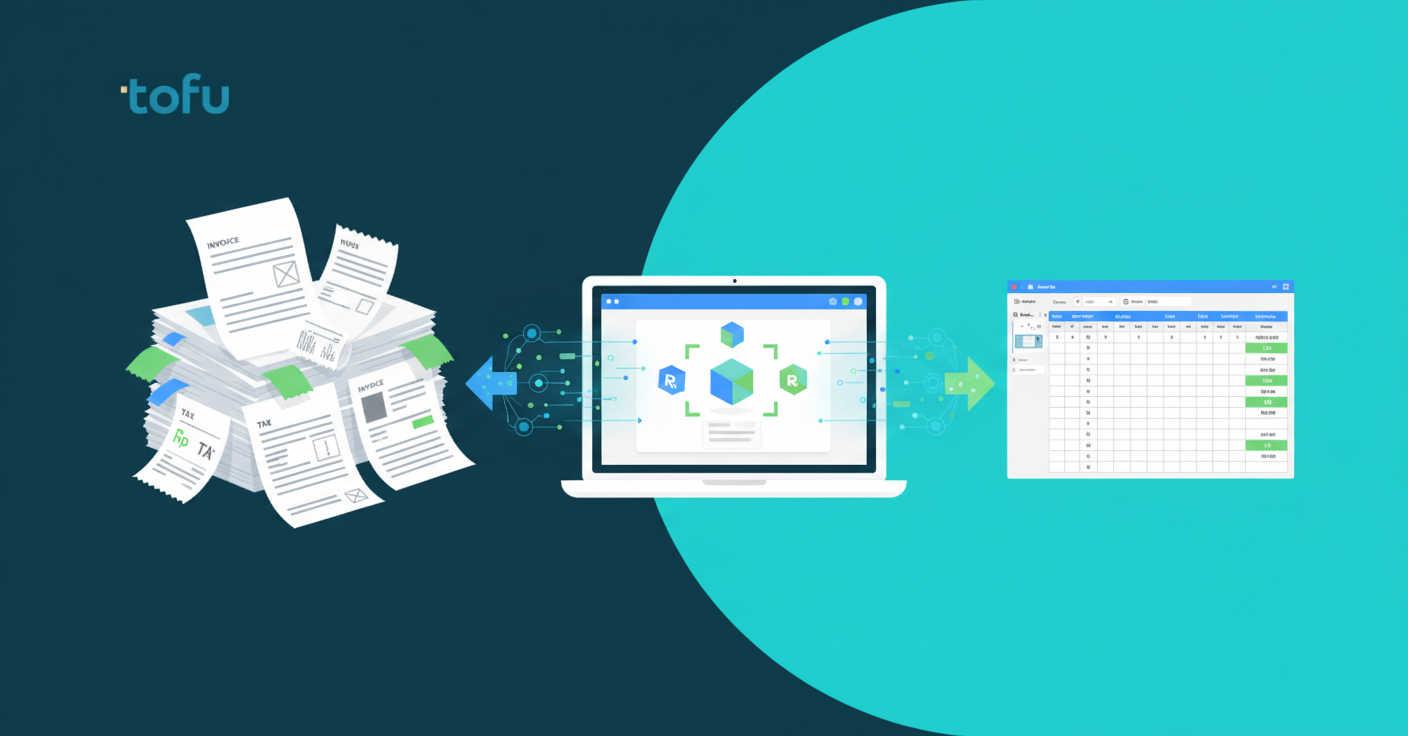
Most firms here run a dual stack. International clients want Xero or QuickBooks. Local compliance demands something else, whether Accurate Online, Mekari Jurnal, or Zahir, to handle PPN at 12%, e-Faktur registration numbers, and withholding tax codes under Articles 21, 23, and 4(2). A good automation tool has to feed both without creating double-handling.
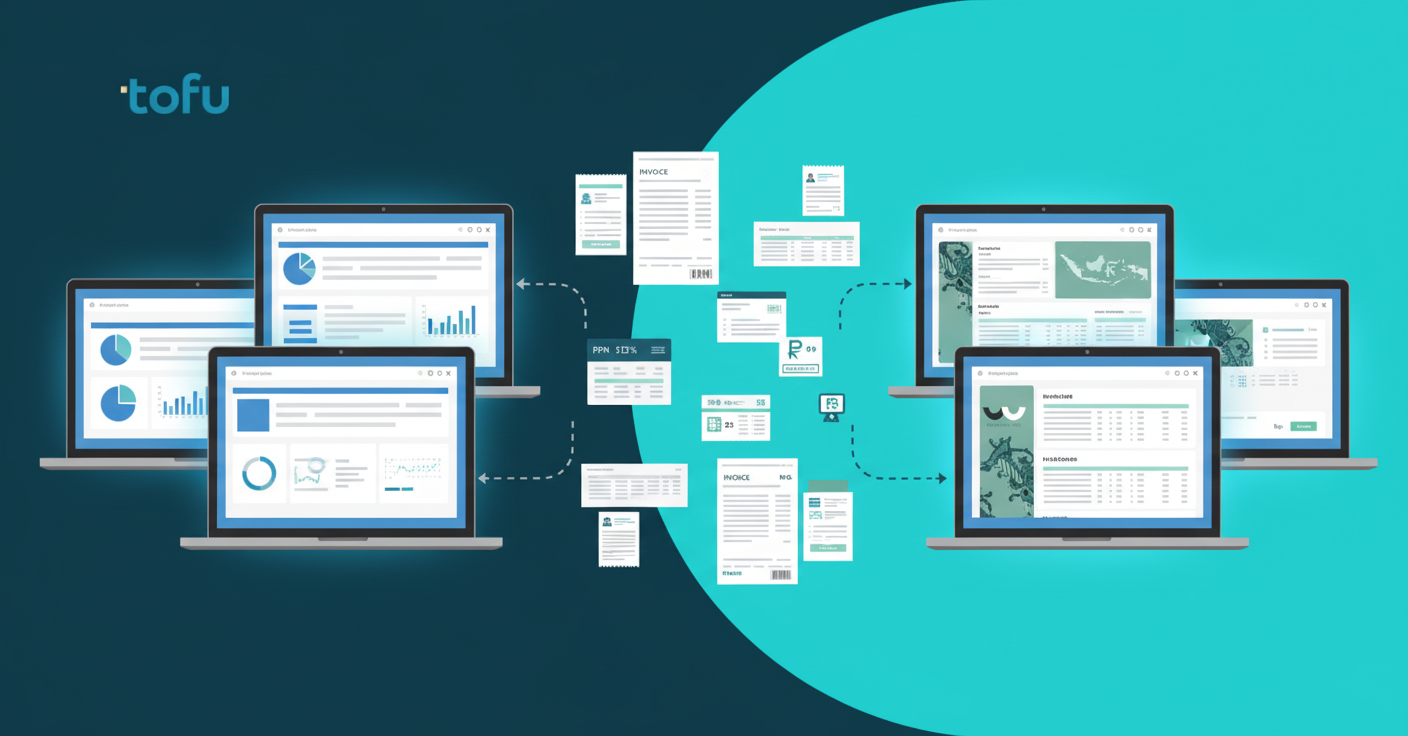
That means the software needs to do more than scan a document and store it. It has to read Bahasa Indonesia documents accurately, recognize Indonesian tax line items, and export structured data in formats each accounting system can actually receive. OCR alone does not get you there. What matters is whether the tool understands what it is reading and codes it correctly the first time.
Every tool on this list was assessed against five criteria specific to Indonesian accounting firms.
All assessments draw from publicly available feature documentation, vendor specifications, and verified customer feedback. No simulated testing was conducted.
Tofu was built for accounting firms running multiple client entities across different accounting stacks, which makes it a natural fit for Indonesia's dual-software reality. With zero configuration required, it reads Indonesian-language invoices and extracts PPN at 12%, e-Faktur registration numbers, and PPh withholding codes under Articles 21, 23, and 4(2) without any template setup. The AI learns your chart of accounts from day one.
Indonesian accounting firms managing 10 to 50 client entities on mixed software stacks who process Bahasa Indonesia documents with complex tax line items.
Tofu closes the gap between Indonesian-language client documents and whichever accounting software you run. Whether that's Xero for an international client or Accurate Online for local PPN compliance, the same document goes in, and structured data comes out, already coded.
"Before using Tofu, it would take me between 3 to 4 hours to input and review a client's invoices. With Tofu, I can now complete the process in 30 to 60 minutes." - Tammy Tan, Bookkeeper, Klozer (Malaysia)
DOKKA is an Israel-founded AP automation tool built for corporate finance departments running enterprise ERPs like NetSuite, SAP Business One, and Acumatica. Its strengths sit in multi-level approval workflows, three-way PO matching, and financial close management.
Internal finance teams at mid-market Indonesian companies who need approval routing inside an enterprise ERP, not multi-client document extraction.
Deployment takes 7 to 14 days. The interface supports English, Hebrew, Italian, and Spanish only. There is no public evidence of Bahasa Indonesia document processing or Indonesian tax code recognition, and bank statement processing does not reliably support scanned copies.
DOKKA is a corporate AP tool, not a multi-client bookkeeping automation tool. If you run an Indonesian accounting firm processing client invoices across Xero, Accurate Online, or Mekari Jurnal, DOKKA was not built for your workflow.
Datamolino is a document capture tool built for UK and Australian accounting firms, offering line-item extraction with a human verification layer for unclear documents. It uses supplier fingerprinting and per-document pricing.
UK or Australian Xero firms processing clean, Latin-script invoices in English, French, German, or Spanish who can tolerate up to 24-hour turnaround on complex documents.
Latin-script languages only. Bahasa Indonesia documents cannot be automated. No CSV export paths to Accurate Online, Mekari Jurnal, or Zahir.
Datamolino was built for Western markets. Without Bahasa Indonesia support or Indonesian tax code recognition, it cannot handle the documents Indonesian accounting firms process daily.
AutoEntry is a Sage-owned document capture tool built on a credit system, popular in UK and Ireland markets.
UK or Ireland Sage users processing low volumes of clean English-language invoices who prefer pay-per-document over flat monthly pricing.
AutoEntry's help center explicitly rejects Arabic and Chinese/Japanese font documents. There is no documented Bahasa Indonesia support. Bank statements cost 3 credits per page, meaning a 50-page statement burns 150 credits. Credits expire after 90 days. No CSV export paths to Accurate Online, Mekari Jurnal, or Zahir.
AutoEntry was designed for English-only document workflows in Western markets. For Indonesian firms processing Bahasa Indonesia invoices with PPN and PPh line items, the credit model alone creates unpredictable costs before you even get to the language gap.
HubDoc ships free with every Xero subscription, which explains its adoption. What it cannot explain is why firms stick with it once they hit its limits.
Xero users who only need receipt storage and can manually enter every line item themselves.
No line-item extraction, confirmed by Xero with no development planned. English only, no Bahasa Indonesia support. No CSV export paths to Accurate Online, Mekari Jurnal, or Zahir. Rated 3.5 stars on the Xero App Store with no meaningful updates since its 2018 acquisition. Not available in all Xero markets.
Free has a cost. If your clients send multi-line Indonesian invoices with PPN and PPh codes, HubDoc hands that work back to you.
Dext is a legacy pre-accounting tool built primarily for English-speaking markets, with per-client pricing and a credit-based line-item add-on that requires manual activation per supplier before it delivers any value.
UK, US, or Australian firms on Sage or FreeAgent processing primarily English-language documents who can absorb pricing that scales with client count.
Line-item extraction consumes credits and must be toggled on per supplier. Multilingual support is limited, with no documented Bahasa Indonesia processing. No CSV export paths to Accurate Online, Mekari Jurnal, or Zahir. A 50-client firm pays approximately $849/month on Dext versus $199/month on Tofu Business for the same client count.
Dext was built for English-speaking markets and priced accordingly. For Indonesian firms managing multi-entity clients with Bahasa Indonesia documents and local software requirements, the language gap and pricing model both work against you.
Here's how the six tools stack up across the criteria that matter most to Indonesian accounting firms.
| Feature | Tofu | DOKKA | Datamolino | AutoEntry | HubDoc | Dext |
|---|---|---|---|---|---|---|
| Bahasa Indonesia extraction | Yes | No | No | No | No | No |
| Line-item extraction included | Yes | Yes | Yes | Extra cost (2x credits) | No | Extra cost (credits) |
| PPN and PPh tax code recognition | Yes | No | No | No | No | No |
| Xero/QuickBooks integration | Yes | Yes | Yes | Yes | Yes (Xero only, free) | Yes |
| Accurate/Jurnal/Zahir CSV export | Yes | No | No | No | No | No |
| Bank statement processing | Yes (unlimited) | Limited | Per-page fee | 3 credits per page | CSV only | Credit-based |
| Flat monthly pricing | Yes | No | No | No | Yes (free with Xero) | No |
| Setup time | 15 minutes | 7-14 days | Immediate | Immediate | Immediate | Hours per client |
| Pricing (50 clients) | $199/month | $400+/month | $212+/month | $298+/month | Free with Xero | $849/month |
Tofu is the only tool on this list that covers all three Indonesia-specific requirements: Bahasa Indonesia extraction, PPN and PPh recognition, and CSV export paths to local accounting systems.
Indonesian accounting firms face a compliance reality that most global tools were never built for. E-Faktur registration numbers must be captured accurately for input tax credit validation - and non-compliance can trigger deactivation of e-invoicing access. Tofu reads those fields from Bahasa Indonesia documents without any template setup, alongside PPN at 12% and Article 21, 23, and 4(2) withholding codes automatically.
No other tool on this list does that. And when your client runs Accurate Online instead of Xero, Tofu's CSV export keeps the same workflow running. One tool. Every client. Every stack.
You can't automate Indonesian bookkeeping software workflows with tools built for English-only markets. E-Faktur numbers, PPN at 12%, and Article 21 withholding codes live in Bahasa Indonesia documents, and your automation tool either reads them correctly or it doesn't. Tofu does, across every accounting system your clients use, without per-document fees or multi-week deployments. See how it handles your documents in a quick demo.
Tofu is the only tool on this list that supports both native Xero/QuickBooks integration and CSV export to Indonesian systems like Accurate Online, Mekari Jurnal, and Zahir. Other tools lock you into one stack or require separate workflows for different clients.
Per-document or credit-based pricing becomes unpredictable when your volume fluctuates or you process multi-page bank statements. Flat monthly pricing at $79 to $399 per month with unlimited users lets you process as much as you need without rationing access or watching credit balances.
Most global tools cannot. Tofu reads Bahasa Indonesia documents without configuration and recognizes PPN at 12%, e-Faktur registration numbers, and PPh withholding codes under Articles 21, 23, and 4(2) automatically. Tools like HubDoc, Dext, and AutoEntry only process English-language documents.
Header-only extraction captures supplier name, date, and total amount, leaving you to type every individual line yourself. Line-item extraction reads description, quantity, unit price, account code, and tax treatment for every line automatically. On a 30-line invoice, that's the difference between 5 minutes of typing and zero.
Tofu requires 15 minutes per client with zero configuration. The AI reads your existing chart of accounts and learns your coding patterns immediately. Legacy tools like DOKKA require 7 to 14 days of deployment, and Dext requires hours of per-client rule-building before you process your first document.