SunTao Lai
March 31, 2026


You open the invoice. You type the supplier name, date, amount, every line item, one by one. Then you repeat it for the next invoice, and the next one, and the next. The tools you've tried either reject Chinese documents, charge per page, or require hours of setup per client. Australian firms need bookkeeping automation software that handles Xero integration properly, processes documents in any language, and charges flat monthly fees that stay predictable as your client list grows. Here's what works.
TLDR:
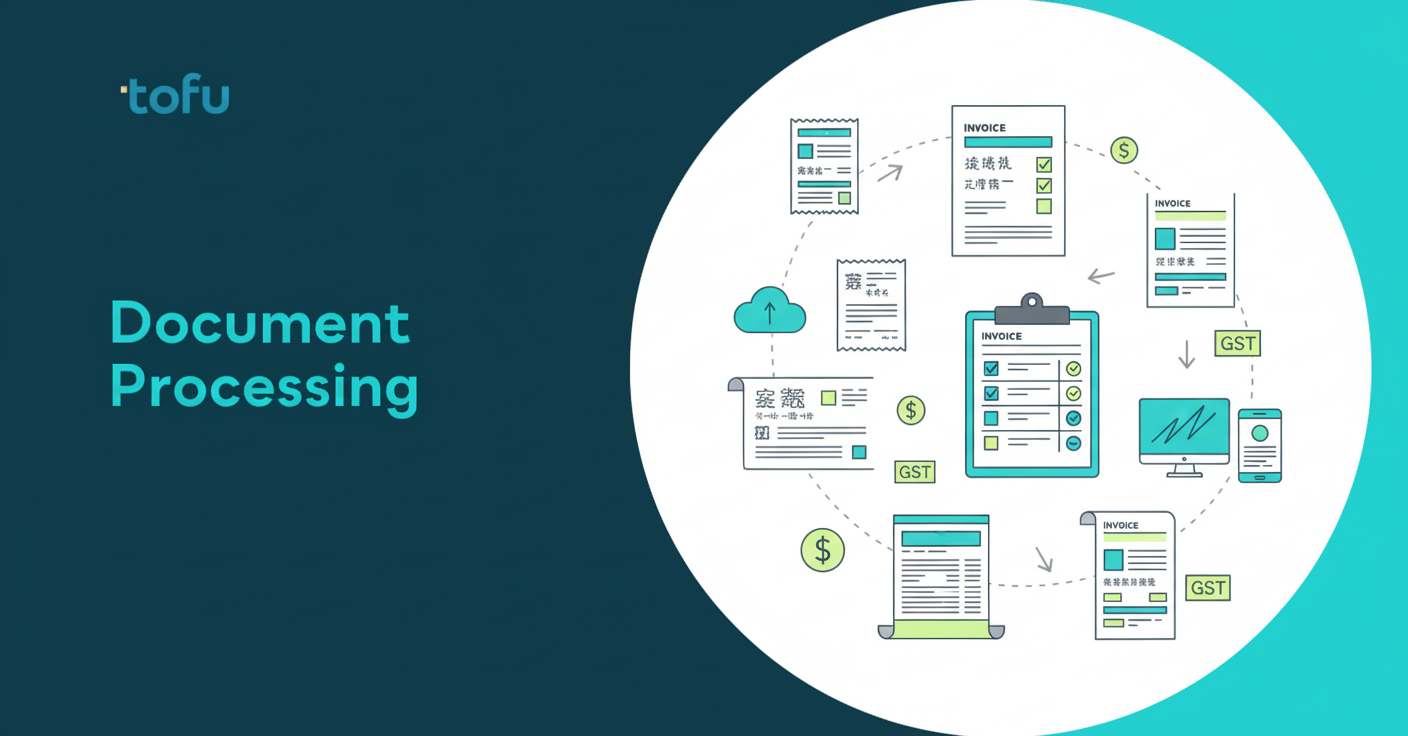
Bookkeeping automation software reads invoices, receipts, and bank statements, extracts the data, and posts transactions directly into your accounting system. Instead of typing supplier names, dates, amounts, and line items one by one, the software handles extraction and categorization. You review, correct if needed, and publish.
For Australian accounting firms, this matters because most clients use Xero or MYOB. The software needs native integration with local accounting systems and understands Australian GST codes and BAS-ready transaction classification. A tool built for the US market won't handle GST-inclusive pricing or input tax credits correctly.
The best tools go beyond basic OCR. They extract every line item from complex invoices, learn your chart of accounts over time, and catch duplicate postings before they hit the ledger.
We tested each tool against six criteria relevant to Australian accounting firms.
Line-item extraction accuracy came first. BAS lodgement requires transaction-level detail beyond invoice totals. We tested how well each tool handled multi-line invoices with mixed GST rates and complex descriptions.
Xero integration quality ranked second. Over 60% of Australian small businesses run on Xero, so native integration and proper GST code mapping matter. We checked whether each tool published transactions with source documents auto-attached and preserved audit trails.
Multilingual document support mattered because Australian firms process invoices from Asian suppliers regularly. We tested Chinese, Thai, and Vietnamese documents to see which tools could extract and translate accurately.
GST coding accuracy determined whether extracted transactions mapped correctly to input tax credits, GST-free supplies, and capital acquisitions.
Bank statement processing capability measured whether tools could handle statements from Australian banks in multiple formats and lengths without manual intervention.
Pricing transparency closed the list. We focused on flat monthly pricing over per-document or per-user fees that become unpredictable as client volume grows.
Tofu reads invoices, receipts, and bank statements in 200+ languages and publishes directly to Xero with full line-item detail. Australian firms processing Chinese supplier invoices or Vietnamese documentation get automatic extraction and English translation without manual entry.
The tool learns your chart of accounts from past Xero transactions, maps GST codes automatically, and starts extracting within minutes of connection. No template building. No rule configuration. When your team corrects the AI, it remembers those patterns permanently.
Bank statements from NAB, CBA, Westpac, or any Australian bank upload as PDFs and convert to transaction-level data ready for reconciliation. Tested on 1,000+ page statements without page limits or per-document fees.
Tofu is a Xero Global App of the Year finalist with 5.0 stars on the Xero App Store. Firms report cutting per-client bookkeeping time from 3-4 hours to 30-60 minutes.
Pricing starts at AU$120/month for 50 clients with unlimited users.
Native GST and BAS lodgement integrated with ATO reporting. Bank reconciliation with feeds from all major Australian banks. Single Touch Payroll for award compliance and superannuation management. Xero App Store with 1,000+ integrations including document processing tools.
Xero handles the ledger but doesn't extract line-item data from invoices or process supplier documents automatically. Firms layer document processing tools on top to avoid manual data entry.
Good for Australian accounting firms and SMEs that need core accounting software with strong local compliance features and third-party integrations to build a complete tech stack.
Limitation: No invoice extraction or receipt processing. You still type every line manually unless you add a tool like Tofu.
Bottom line: Xero is the accounting system Australian firms run on, making it the ideal integration partner for tools that handle invoice and receipt extraction.
EzzyBills is an Australian fintech that provides AI-powered invoice data extraction with native integrations to Xero, QuickBooks, and MYOB. The tool handles line-item extraction from PDF invoices and scanned documents, with ABN-based supplier matching to Australian business records. It works well for domestic Australian invoicing with standard English-language documents.
The limitation: no handwritten document support, no multilingual processing for Asian supplier invoices, and enterprise plans run approximately AU$1,000/year. If your firm handles Chinese fapiao, handwritten receipts, or complex international supplier documents common in Australian import businesses, EzzyBills won't cover it.
AutoEntry is a Sage-owned document capture tool that extracts invoice data using OCR and charges per document through a credit system. Each document processed consumes credits from your monthly allocation, making costs variable based on volume.
OCR extraction for invoices, receipts, and bank statements with integration to Sage, Xero, QuickBooks, and MYOB. Purchase order matching and supplier statement reconciliation included. Mobile app available for receipt capture.
AutoEntry works for Sage users in the UK and Ireland who process low invoice volumes where per-document credit pricing stays predictable. But their help documentation confirms the tool rejects documents in Arabic or Chinese/Japanese fonts. Line-item extraction costs double credits. Bank statements cost 3 credits per page.
For Australian firms processing Asian supplier invoices or handling clients with large bank statement volumes, AutoEntry's English-only restriction and credit-rationing model creates problems.
Hubdoc is Xero's bundled document capture tool that extracts header-level data from invoices and receipts. Free with Xero subscriptions, it offers email forwarding, mobile scanning, and bank statement PDF to CSV conversion.
It works for simple English receipts where totals matter more than line items. But it doesn't extract line items (Xero confirmed no plans to add this), supports English only with no handwriting recognition, and holds a 3.5-star rating on Xero App Store.
For Australian firms needing full GST coding and BAS accuracy across wholesale invoices, construction quotes, or Asian supplier documents, Hubdoc requires manual line-item entry that defeats the purpose of automation.
Dext is a receipt capture tool that charges per client and uses a credit system for line-item extraction. The product requires manual rule-building before it delivers value, which creates setup friction for firms onboarding new clients.
Receipt and invoice capture via mobile app and email forwarding. Integration with Xero, QuickBooks, MYOB, and Sage. Expense management with mileage tracking and approval workflows. Bulk document processing once rules are configured per client.
Good for firms with existing Dext contracts and steady client rosters where supplier patterns don't change often.
Limitation: Rule-building takes hours per client, line-item extraction costs extra credits, and Dext costs AU$849/month versus Tofu's AU$199/month. Multilingual support is weak.
Here's how the leading bookkeeping automation tools compare on features that matter to Australian accounting firms.
| Feature | Tofu | Xero | EzzyBills | AutoEntry | Hubdoc | Dext |
|---|---|---|---|---|---|---|
| Line-item extraction | Yes | No | Yes | Yes (2x credits) | No | Yes (extra credits) |
| Xero integration | Yes | Native | Yes | Yes | Yes | Yes |
| MYOB integration | CSV | No | Yes | Yes | No | CSV |
| Multilingual (200+ languages) | Yes | No | No | No | No | No |
| Handwriting recognition | Yes | No | No | No | No | No |
| Bank statement processing | Unlimited | Native | Limited | Per page (3 credits) | CSV only | Credits |
| Zero-configuration setup | Yes | N/A | No | No | No | No |
| Chinese fapiao support | Yes | No | No | Rejected | No | No |
| Auto-split bulk PDFs | Yes | No | Limited | No | No | Limited |
| Pricing model | Flat monthly | Subscription | Annual | Per credit | Free with Xero | Per client + credits |
| GST/BAS focused | Yes | Yes | Yes | No | Yes | No |
Australian firms face a specific problem: clients run on Xero, suppliers send invoices in Chinese or Vietnamese, and MYOB migrations create document processing backlogs. Tofu solves all three.
Xero powers over 60% of Australian small businesses, and Tofu integrates natively with a 5.0-star App Store rating. Chinese fapiao, Thai invoices, and handwritten receipts extract automatically with English translation. Legacy tools reject these documents entirely.
When firms migrate clients from MYOB to Xero, they rebuild their entire document workflow. Tofu connects in minutes without template building or supplier rule configuration. The AI learns from existing Xero transactions and starts extracting immediately.
The math: a bookkeeper earning AU$70,000/year spending 10 hours weekly on data entry costs AU$673/week. Tofu at AU$120/month pays for itself if it saves two hours.
The gap between what Xero automation tools in Australia promise and what they deliver usually comes down to setup time and language support. Tofu eliminates both problems with zero-configuration AI that reads 200+ languages and publishes directly to your Xero ledger with full line-item detail. Your bookkeepers spend less time typing and more time reviewing, which is what you're actually paying them to do. Test Tofu with your messiest invoices and see how it handles documents other tools reject.
Start with your client base composition and document types. If you process Chinese supplier invoices or handwritten receipts, choose a tool with multilingual support like Tofu. If all your clients are on Xero and send only English documents, focus on native Xero integration and line-item extraction. Check whether pricing is flat monthly or per-document before committing.
Tofu, EzzyBills, AutoEntry (costs double credits), and Dext (costs extra credits) all extract line items. Hubdoc and basic Xero invoice entry do not, you still type every line manually. For Australian firms filing BAS returns that require transaction-level detail, line-item extraction saves 50-70% of data entry time.
Yes. Tofu processes statements from NAB, CBA, Westpac, and all Australian banks without page limits or format restrictions. AutoEntry charges 3 credits per page. Hubdoc converts statements to CSV but doesn't extract transaction data. Most tools handle statements, but pricing models and page limits vary widely.
Tofu processes documents in 200+ languages including Chinese fapiao, Vietnamese invoices, and Thai receipts with automatic English translation. AutoEntry rejects Chinese and Arabic fonts entirely. Hubdoc, EzzyBills, and Dext support English only. For Australian firms with Asian import clients, language support determines whether automation works at all.
Flat monthly pricing becomes cheaper once you process more than 50-100 documents monthly. Tofu charges AU$120/month for 50 clients with unlimited documents and users. Dext charges per client plus credits for line items. AutoEntry charges per document via credits. If client volume fluctuates or you process large bank statements, flat pricing prevents bill shock.