
Saman Herath
January 23, 2026

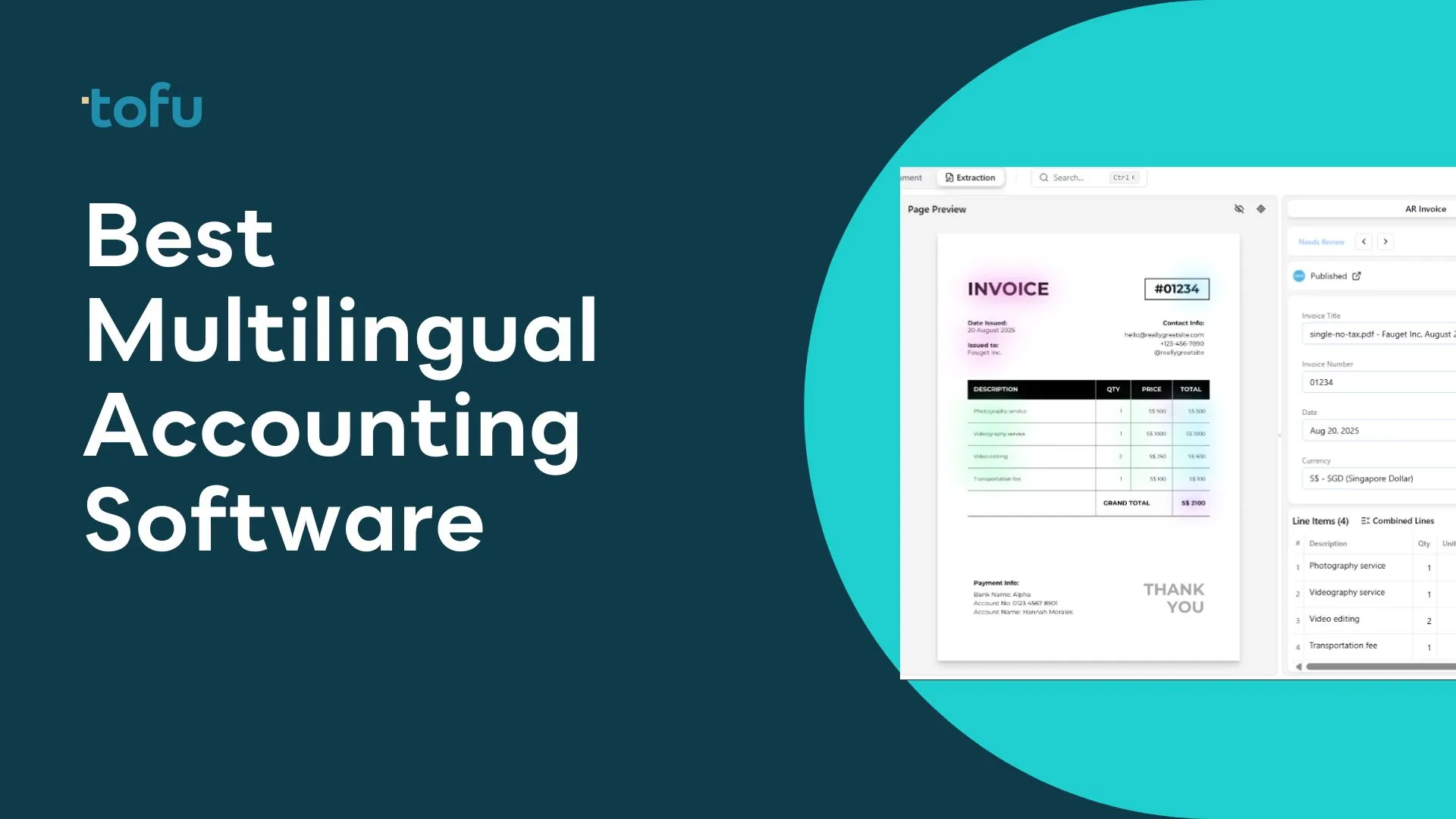
International businesses face a unique challenge that domestic companies never encounter: managing finances across languages, currencies, and regulatory frameworks simultaneously. When your supplier invoices arrive in Mandarin, your subsidiary reports in German, and your headquarters consolidates in English, generic accounting software simply breaks down.
According to industry research, the global accounting software market continues expanding as businesses seek solutions that handle multiple languages, automatic currency conversion, and country-specific tax compliance. With 90% of finance teams expected to use at least one AI-powered solution by 2026, the demand for intelligent multilingual processing has never been higher.
Quick Answer: Tofu stands out as the best multilingual document processing solution for international accounting in 2026, offering AI-powered extraction that handles invoices and receipts in over 200 languages without configuration or rule setup. For accounting firms and businesses processing documents from suppliers across Asia, Europe, the Middle East, and beyond, Tofu's zero-configuration approach delivers accuracy that traditional OCR and manual entry cannot match.
Multilingual accounting software provides financial management capabilities that work across language barriers. Rather than forcing all business operations through a single language, these platforms adapt to the diverse linguistic needs of international organizations - from user interface languages to document processing capabilities.
The core distinction lies between interface multilingualism and document multilingualism. Many platforms offer interface translation - menus and screens in French, Spanish, or Japanese - but falter when processing actual business documents. An invoice arriving from a Shanghai supplier in Simplified Chinese still requires manual entry, even if the software displays a Mandarin interface.
True multilingual capability means the software can read, extract, and process financial documents regardless of their source language. This proves essential for several common international business scenarios. Accounting firms serving multinational clients receive documents from dozens of countries in their clients' supplier networks. Import-export businesses process invoices, customs documents, and receipts from trading partners across multiple continents. Multinational corporations consolidate subsidiary financial data generated in local languages.
The technology challenge is significant. Unlike simple text translation, financial document processing requires understanding invoice formats, extracting specific data fields, identifying tax amounts, and mapping vendor information - all while the source material varies wildly in language, layout, and terminology. Traditional OCR systems require rule configuration for each document format and language combination, creating maintenance burdens that quickly become unmanageable.
Modern AI-powered solutions like Tofu approach this differently. Machine learning models trained on millions of documents learn to understand invoice context regardless of language. A Chinese fapiao, German Rechnung, Arabic invoice, and Japanese receipt all process through the same system without per-language configuration. This zero-configuration approach fundamentally changes what becomes practical for international document processing.
Selecting software for international operations requires evaluating capabilities that domestic-focused businesses never consider. The wrong choice leads to manual workarounds, processing delays, and compliance risks across multiple jurisdictions.
Document Processing Language Support
The most critical capability for international operations is the software's ability to process documents in source languages. Verify how many languages the system supports for actual data extraction - not just interface translation. Solutions like Tofu support 200+ languages for document processing, while many competitors support only major Western languages.
Test the system with representative documents from your actual supplier base. Chinese invoices with traditional characters, Arabic documents with right-to-left text, Japanese receipts mixing kanji and katakana - these real-world scenarios reveal whether multilingual claims hold up in practice.
Interface Language Options
For multinational teams, the ability to run the software in local languages improves adoption and reduces training requirements. Verify which interface languages are available and whether users can switch languages individually or if the entire organization must use one language.
Multi-Currency Handling
International business means multi-currency transactions. The software should support automatic exchange rate updates from reliable sources, handle both realized and unrealized gains/losses correctly, and consolidate reporting across currencies. Verify how many currencies are supported - leading platforms handle 150-180+ currencies.
Look for integration with exchange rate providers like OANDA or Open Exchange Rates. Manual rate entry becomes impractical for businesses with significant international transaction volumes.
Multi-Entity and Consolidation
Organizations with subsidiaries, branches, or legal entities in multiple countries need consolidation capabilities. The software should allow each entity to operate in its local currency and language while rolling up into group-level reporting. Automatic intercompany eliminations and currency translation adjustments save significant month-end work.
Country-Specific Compliance
Different countries have vastly different accounting requirements, tax structures, and reporting formats. Verify the software supports the specific countries where you operate. Key considerations include VAT/GST handling for each jurisdiction, local chart of accounts templates, statutory reporting formats, and e-invoicing mandates.
Integration Ecosystem
Multilingual document processing tools like Tofu work best when integrated with robust general ledger platforms. Verify integration availability with your existing accounting system - Xero and QuickBooks integrations are common - and check whether APIs support custom workflows.
Support Availability
International operations may need support across time zones and in multiple languages. Evaluate whether vendor support covers your operating hours and can assist in relevant languages.
| Tool | Best For | Languages | Currencies | Starting Price |
|---|---|---|---|---|
| 1. Tofu | Document processing | 200+ | Via Xero/QBO | $79/month |
| 2. NetSuite OneWorld | Enterprise multinational | Multiple | 190+ | $999+/month |
| 3. Sage Intacct | Mid-market international | Limited | Multiple | ~$10,000+/year |
| 4. Xero | Growing businesses | Interface only | 160+ | ~$15/month |
| 5. QuickBooks Online | SME international | Interface only | 160 | ~$30/month |
| 6. Akaunting | Budget-conscious | 50+ | Multiple | Free tier |
| 7. Dynamics 365 Finance | Large enterprises | Multiple | Multiple | Custom |
| 8. SAP Business One | Mid-size global | 28+ | Multiple | Custom |
| 9. Zoho Books | SME all-in-one | 10+ | 25+ | Free tier |
| 10. FreshBooks | Service businesses | English-focused | 150+ | $19/month |
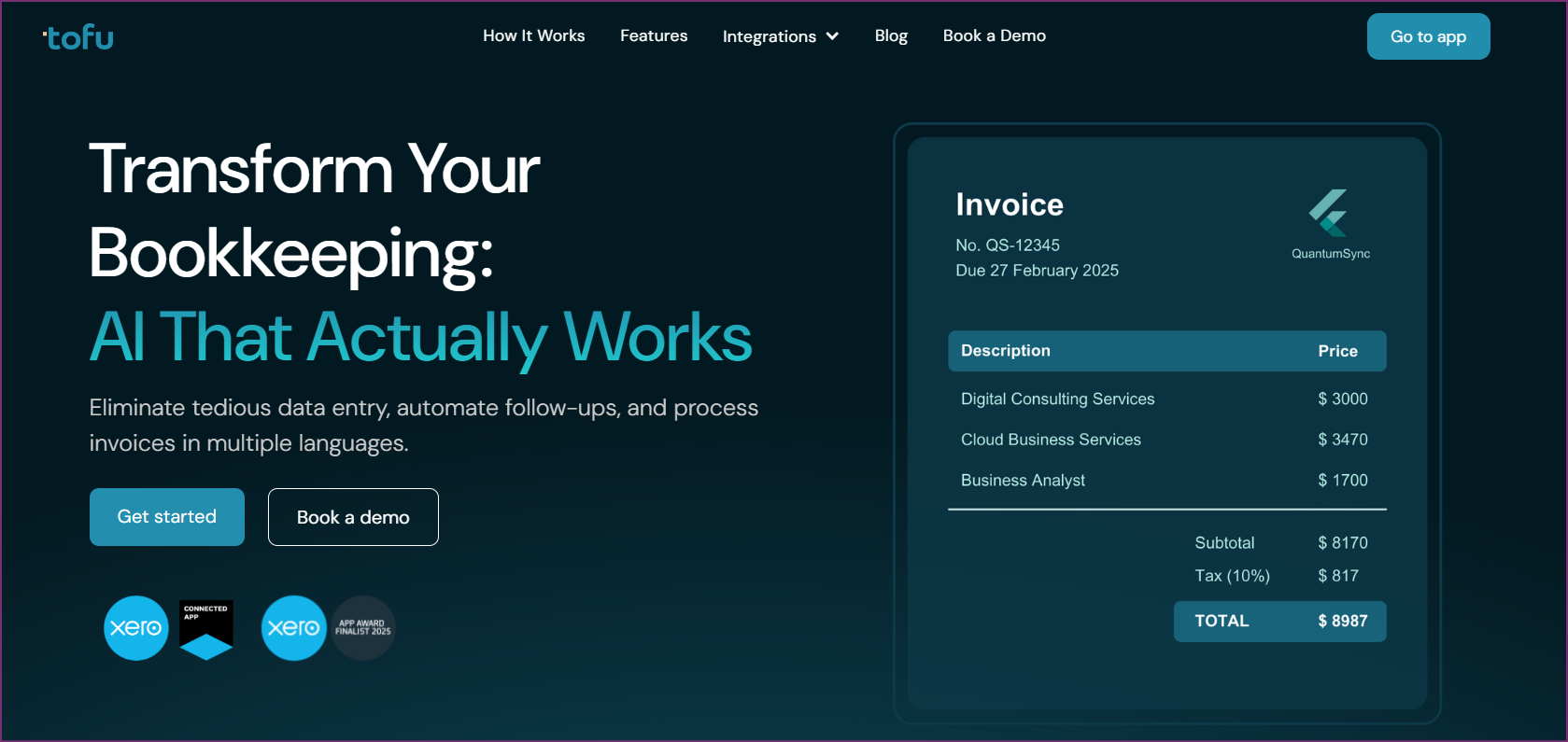
Tofu solves the problem that limits every other accounting platform: actually processing documents in foreign languages. While competitors offer interface translation, Tofu delivers AI-powered extraction that reads invoices, receipts, and financial documents in over 200 languages without any configuration or rule setup.
The platform represents a fundamental shift in how international document processing works. Traditional OCR requires creating rules for each document type, format, and language combination - a maintenance nightmare for businesses processing documents from diverse supplier networks. Tofu's machine learning approach understands invoice context regardless of source language, extracting vendor details, line items, tax amounts, and payment terms automatically.
200+ Language Document Processing
Upload a Chinese fapiao from your Shenzhen supplier, a German invoice from your Munich distributor, an Arabic receipt from Dubai, or a Japanese document from your Tokyo office - Tofu processes them all without configuration changes. This covers the vast majority of global business languages including Chinese (Traditional and Simplified), Japanese, Korean, Arabic, Hebrew, Russian, Hindi, Thai, Vietnamese, and all European languages.
Line-by-Line Extraction
Unlike competitors that capture only invoice totals, Tofu extracts every line item. Descriptions, quantities, unit prices, tax breakdowns - all captured accurately regardless of language. This level of detail proves essential for businesses tracking inventory costs, managing project expenses, or requiring detailed expense categorization.
Automatic PDF Splitting
International document bundles - 50-page bank statements, stacks of supplier invoices, consolidated shipment documentation - upload as single files. Tofu intelligently separates them into individual documents, processes each one, and posts data to your accounting system. No manual splitting required.
Handwritten Document Processing
Field operations, construction sites, and retail environments generate handwritten receipts that most systems reject. Tofu handles handwritten documents alongside typed text, essential for businesses with ground-level operations in diverse markets.
Direct Accounting Integration
Extracted data flows directly into Xero or QuickBooks Online. Vendor mapping, line item posting, and tax categorization happen automatically. Accountants review and approve rather than re-enter, transforming their role from data entry to quality control.
Tofu uses entity-based pricing that eliminates per-user fees:
This pricing model particularly benefits international teams where multiple staff may need system access. A firm with offices in Singapore, London, and New York pays the same as a solo practitioner.
Tofu is ideal for accounting firms serving multinational clients, import-export businesses, and any organization processing invoices from international suppliers. Firms struggling with manual entry of foreign-language documents see immediate time savings.
Tofu was named Xero Global Emerging App of the Year Finalist in 2025 and serves 7 of the Top 10 Global Accounting Networks including Baker Tilly, Deloitte, Mazars, BDO, and PKF. This enterprise adoption across global accounting networks validates the platform's multilingual capabilities at scale.
NetSuite OneWorld delivers comprehensive multinational capabilities for large organizations managing complex global operations. The platform handles multi-subsidiary structures with real-time consolidation across entities, currencies, and accounting standards.
Global consolidation processes data from subsidiaries operating in their local currencies and posts to corporate ledgers with automatic currency translation. Support for both GAAP and IFRS standards allows subsidiaries to report under local requirements while headquarters consolidates under group standards.
Multi-currency capabilities span 190+ currencies with automated exchange rate updates and proper gain/loss accounting. Intercompany transaction management and elimination entries happen automatically during consolidation.
The platform supports multiple interface languages, though the number varies by region. Document processing for non-English invoices typically requires configuration or manual handling outside of standard workflows.
Starting around $999/month for licensing plus $99+ per user. Full implementations often cost significantly more, with annual fees potentially exceeding $250,000 for complex multinational deployments. Implementation costs add substantially to first-year investment.
Large multinational corporations with multiple subsidiaries requiring real-time consolidation and comprehensive ERP functionality.
Sage Intacct provides cloud-based financial management trusted by over 30,000 finance teams. The platform excels at multi-entity consolidation, making it popular among mid-size companies with international operations.
Multi-entity management allows subsidiaries to operate in local currencies while consolidating at the parent level. Automated currency conversion uses exchange rates from providers like OANDA, with proper ASC 830/FAS-52 compliant translation accounting.
Consolidation of hundreds of entities across currencies and geographies completes in minutes rather than days. Real-time drill-down from consolidated figures to entity-level detail supports both strategic oversight and detailed analysis.
The platform is AICPA-endorsed and supports GAAP, IFRS, HIPAA, and GDPR compliance standards. However, document processing primarily supports English, limiting utility for organizations receiving invoices in other languages.
Fully customized pricing based on modules and user count. Expect annual subscriptions ranging from $10,000 to $30,000+ for typical mid-market implementations. Core functionality is included, with advanced capabilities requiring additional modules.
Mid-market companies with multi-entity structures requiring sophisticated consolidation and reporting capabilities.
Xero delivers cloud-based accounting with strong multi-currency support and unlimited users on all plans. The platform serves growing businesses that need international transaction handling without enterprise complexity.
Multi-currency capabilities cover over 160 currencies with hourly exchange rate updates. Create invoices in any supported currency, track foreign currency accounts, and view reports in both local and foreign currencies.
The app marketplace includes over 800 integrations, extending functionality for specific needs. Tofu integrates directly for automated document processing in 200+ languages, addressing Xero's limitation in handling foreign-language source documents.
Unlimited users on all plans makes Xero cost-effective for international teams spread across multiple locations.
Regional pricing varies. Multi-currency functionality included in all plans.
Growing businesses needing multi-currency transaction handling with room to add specialized tools through integrations.

QuickBooks Online provides familiar accounting workflows with multi-currency capabilities adapted for small to medium businesses operating internationally. The platform's widespread adoption means abundant resources and support.
Multi-currency accounting supports approximately 160 currencies with automatic exchange rate application. Invoice customers, record expenses, and receive payments in foreign currencies with automatic gain/loss calculation based on rate fluctuations.
The app marketplace extends functionality through integrations including Tofu for processing invoices in any language. Document processing in QuickBooks itself is primarily English-focused.
Plans range from approximately $30-200/month depending on features. Multi-currency available on higher-tier plans (Essentials and above). 30-day free trial available.
Small to medium businesses familiar with QuickBooks seeking basic multi-currency capabilities.
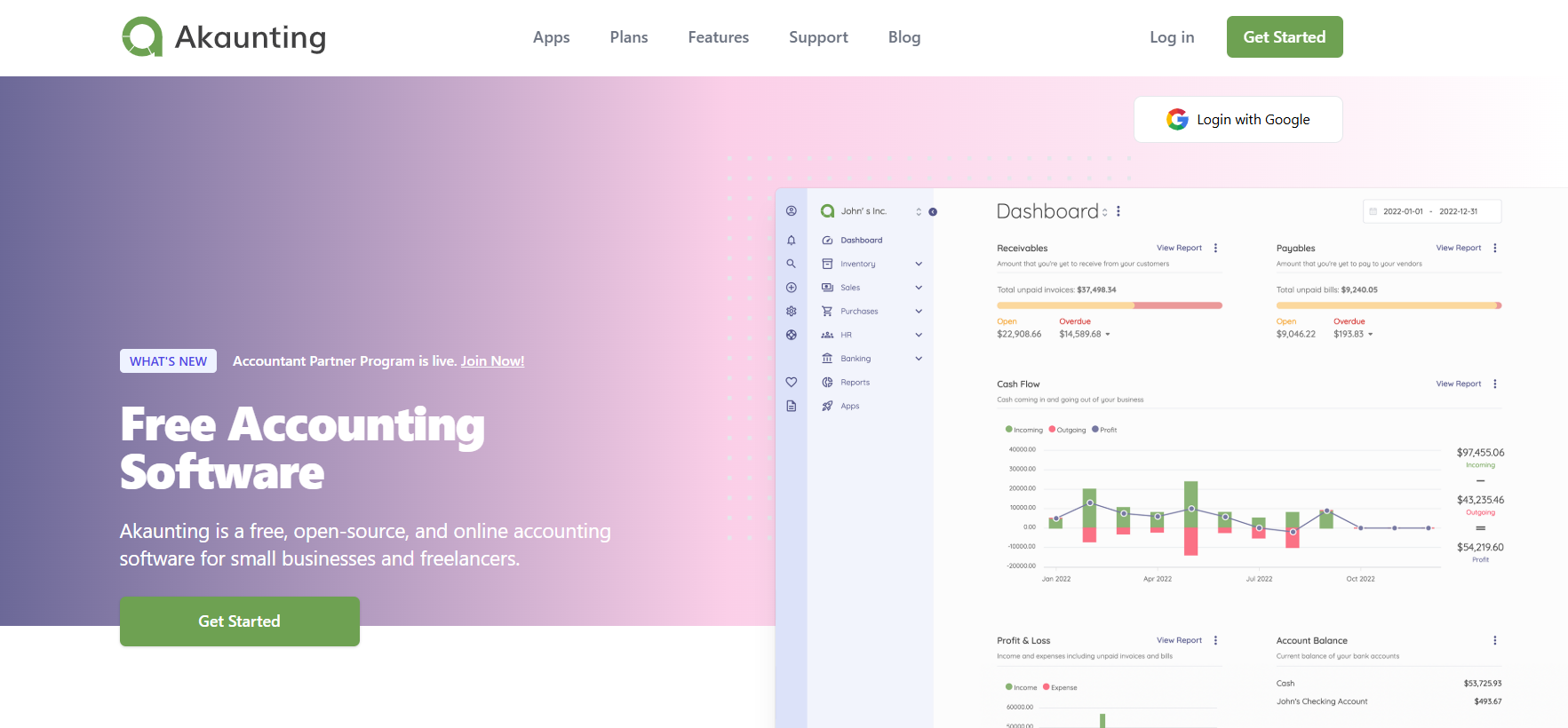
Akaunting delivers open-source accounting software with genuine multilingual capabilities - both interface and community contributions spanning 50+ languages. For budget-conscious businesses, the free tier provides surprising functionality.
Interface translation covers 50+ languages through community volunteer contributions. Multi-currency and multi-company management work from a single account. As open-source software, businesses can customize for specific needs without licensing fees.
The platform handles invoicing, expenses, and standard accounting functions. While not offering AI-powered document processing, the multilingual interface serves teams operating in non-English environments.
Budget-conscious small businesses needing basic accounting with multilingual interface options.
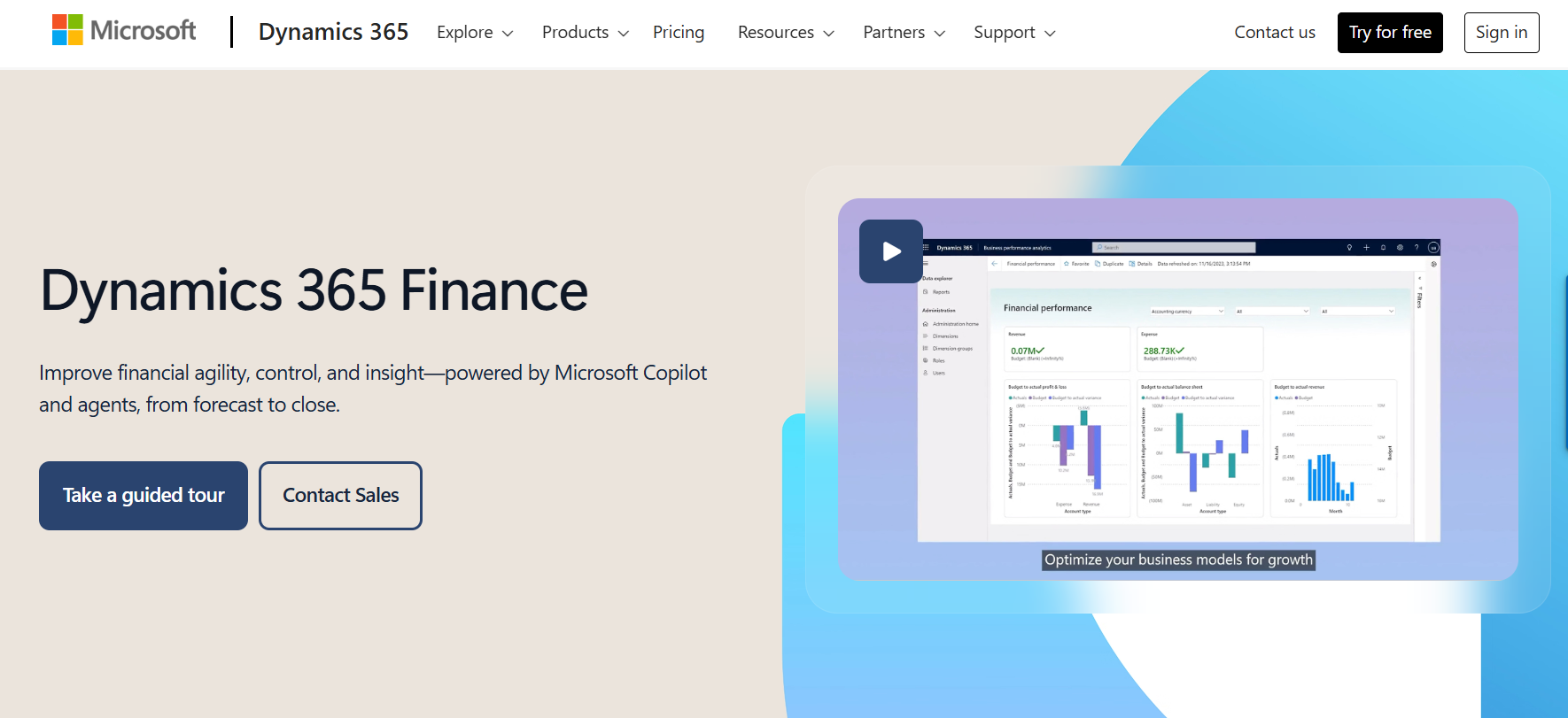
Dynamics 365 Finance delivers enterprise-grade financial management integrated with the broader Microsoft ecosystem. Large organizations with complex global operations find the platform's depth appropriate for their needs.
Global financial management includes multi-entity, multi-currency, and multi-language support. Advanced budgeting and forecasting tools serve strategic planning needs. Integration with other Dynamics 365 modules creates comprehensive enterprise management.
Compliance support covers multiple regulatory frameworks across jurisdictions. The Microsoft ecosystem integration benefits organizations already invested in Microsoft technologies.
Custom enterprise pricing based on modules, users, and implementation scope. Expect significant investment appropriate to enterprise-grade capabilities.
Large enterprises with complex global operations requiring comprehensive ERP functionality.
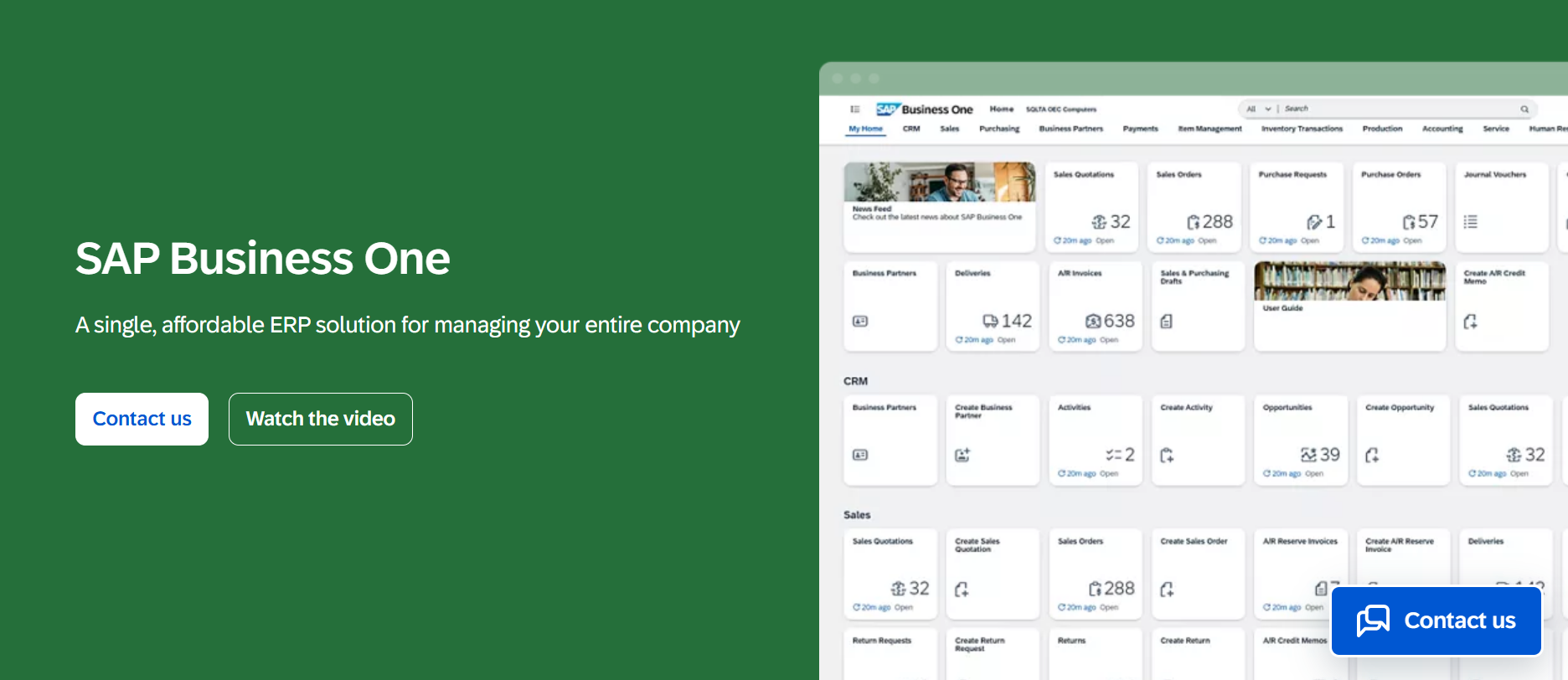
SAP Business One brings SAP enterprise capabilities to mid-size businesses with multi-language and multi-currency support. Organizations in manufacturing and distribution particularly benefit from the platform's operational depth.
Interface support spans 28+ languages, serving multinational teams in local languages. Multi-currency handling manages international transactions with proper accounting treatment.
Integrated supply chain, manufacturing, and financial management creates end-to-end visibility. Strong inventory management and production planning complement the accounting core.
Custom pricing through SAP partner network. Mid-market appropriate investment with implementation services typically required.
Mid-size manufacturing and distribution companies needing integrated operations and financial management with multilingual interface support.
Zoho Books provides comprehensive small business accounting with interface support for multiple languages. The platform offers strong value with free and affordable tiers.
Multi-language interface serves teams preferring non-English environments. Multi-currency support handles international transactions with 25+ currencies. Bank feeds and reconciliation automate routine bookkeeping tasks.
Integration with the broader Zoho ecosystem benefits organizations using Zoho CRM, Zoho Projects, or other Zoho applications.
Competitive SME pricing makes Zoho accessible for smaller businesses.
Small businesses seeking affordable accounting with multilingual interface options and Zoho ecosystem integration.
FreshBooks prioritizes simplicity for service businesses and freelancers. Multi-currency invoicing serves businesses with international clients, though the platform focuses primarily on English-speaking markets.
Multi-currency invoicing supports 150+ currencies for sending invoices to international clients. Time tracking and project management serve service-based business models. Expense tracking with mobile receipt capture handles business costs.
The interface is primarily English-focused, making FreshBooks most suitable for English-speaking service providers with international client bases.
Service businesses and freelancers invoicing international clients in multiple currencies.
| Feature | Tofu | NetSuite | Sage Intacct | Xero | QuickBooks | Akaunting | Dynamics 365 | SAP B1 | Zoho Books | FreshBooks |
|---|---|---|---|---|---|---|---|---|---|---|
| Document Languages | 200+ | Limited | Limited | Limited | Limited | Limited | Limited | Limited | Limited | Limited |
| Interface Languages | Via GL | Multiple | English | Limited | Limited | 50+ | Multiple | 28+ | 10+ | English |
| Currencies | Via GL | 190+ | Multiple | 160+ | 160 | Multiple | Multiple | Multiple | 25+ | 150+ |
| Multi-Entity | Via GL | Yes | Yes | Limited | Limited | Yes | Yes | Yes | Limited | No |
| Line-Item Extract | Yes | No | No | No | No | No | No | No | No | No |
| Zero Config | Yes | No | No | No | No | No | No | No | No | No |
| Free Tier | Trial | No | No | No | No | Yes | No | No | Yes | No |
| Tool | Entry Price | Mid-Tier | Enterprise |
|---|---|---|---|
| Tofu | $79/month | $199/month | Contact sales |
| NetSuite OneWorld | $999+/month | Custom | Custom |
| Sage Intacct | ~$10,000/year | Custom | Custom |
| Xero | ~$15/month | ~$42/month | ~$78/month |
| QuickBooks Online | ~$30/month | ~$60/month | ~$200/month |
| Akaunting | Free | Paid plans | Custom |
| Dynamics 365 Finance | Custom | Custom | Custom |
| SAP Business One | Custom | Custom | Custom |
| Zoho Books | Free | ~$15/month | ~$50/month |
| FreshBooks | $19/month | $33/month | $60/month |
Managing finances across currencies requires systematic approaches. These practices help maintain accuracy and control:
Exchange Rate Management
Use automated rate updates from reliable providers rather than manual entry. Platforms should pull rates at least daily - hourly for high-volume operations. Document your rate source for audit purposes.
Gain/Loss Accounting
Understand the difference between realized gains/losses (actual transactions) and unrealized gains/losses (revaluation of outstanding balances). Configure your system to handle both correctly according to your accounting standards.
Consolidation Timing
Define clear cut-off procedures for period-end consolidation. All subsidiaries should close before parent consolidation begins. Document the exchange rates used for translation.
Document Processing Strategy
For organizations receiving invoices in multiple languages, implement systematic document processing. Tofu's 200+ language capability handles diverse supplier bases without per-language configuration, eliminating the bottleneck of manual foreign-document entry.
Tofu leads with 200+ languages for actual document extraction - not just interface translation. The AI processes Chinese, Japanese, Arabic, Russian, and virtually any other language without configuration. Most other platforms support interface translation in 10-50 languages but cannot extract data from foreign-language documents automatically.
Yes, enterprise platforms like NetSuite and Sage Intacct support both GAAP and IFRS standards, allowing subsidiaries to report under local requirements while headquarters consolidates under group standards. Mid-market and SME tools typically follow one standard with manual adjustments for others.
For Chinese invoice processing, Tofu extracts data from Chinese fapiao and other invoice formats automatically, posting to Xero or QuickBooks. The AI handles both Simplified and Traditional Chinese without configuration. Other platforms require manual entry or third-party translation services.
Interface multilingual means the software menus and screens display in multiple languages - useful for local teams but doesn't help with processing foreign-language invoices. Document multilingual means the system can extract data from documents written in foreign languages - Tofu excels here with 200+ language support.
For small businesses, Xero or QuickBooks provide multi-currency transaction handling at affordable prices. Akaunting offers free multilingual interface options. To process foreign-language documents, pair these with Tofu for automated extraction in 200+ languages.
Tofu extracts invoice amounts in their original currency and posts to Xero or QuickBooks, which then handles currency conversion and exchange rate accounting. This separation of concerns allows specialized tools to excel at their strengths.
Selecting multilingual accounting software requires distinguishing between marketing claims and practical capabilities. Many platforms offer interface translation while leaving foreign-language document processing to manual entry. True multilingual operations require both dimensions.
For organizations struggling with manual entry of invoices from international suppliers, Tofu transforms the equation with AI-powered extraction across 200+ languages. No configuration, no rules to maintain, no language-by-language setup - just upload documents and receive accurate extracted data in your accounting system.
Enterprise multinationals find comprehensive solutions in NetSuite OneWorld or Microsoft Dynamics 365 Finance. Mid-market international companies benefit from Sage Intacct's consolidation capabilities. Growing businesses leverage Xero's multi-currency features with unlimited users.
The most effective approach often combines strengths: a solid general ledger platform for core accounting and multi-currency handling, paired with specialized document processing from Tofu for multilingual source documents. This combination delivers both comprehensive financial management and the practical ability to process invoices regardless of their language.
Last updated: January 2026. All pricing and features verified as of publication date.