Jay Sen Lon
January 27, 2026

Accounting firms face mounting pressure to deliver faster closes, maintain accuracy across growing client portfolios, and compete with offshore bookkeeping services charging a fraction of traditional rates. Manual transaction categorization, bank reconciliation, and journal entry posting consume billable hours that could go toward advisory services.
Botkeeper positions itself as the AI-powered bookkeeping solution that automates routine tasks while combining machine learning with human accountant oversight. The platform promises 97% AI accuracy on general ledger posts, automated bank reconciliation, and the ability to scale firm capacity without proportional headcount increases.
This comprehensive review examines whether Botkeeper delivers on those promises, analyzes pricing against alternatives, and determines which firms benefit most from this hybrid AI-plus-human approach.
Botkeeper is an AI-powered bookkeeping automation platform designed specifically for accounting firms and their clients. Unlike pure software solutions requiring firms to perform all bookkeeping internally, Botkeeper combines artificial intelligence with optional human bookkeeper services to handle transaction categorization, bank reconciliation, and financial close processes.
The platform integrates with QuickBooks Online and Xero to automate repetitive bookkeeping tasks through machine learning algorithms. Botkeeper's AI categorizes transactions, reconciles bank accounts, posts journal entries, and flags uncertain items for human review. Firms can choose software-only licenses or add dedicated bookkeeper services for full-service automation.
Founded to help accounting practices compete with offshore providers while maintaining quality, Botkeeper serves thousands of accounting firms across North America. The company targets firms seeking to increase client capacity, reduce bookkeeping labor costs, and free senior staff for higher-value advisory work.
Best for: Mid-size accounting firms (10-100+ clients) seeking to automate routine bookkeeping, reduce offshore reliance, and scale capacity without proportional hiring.
Not ideal for: Solo practitioners with budget constraints, firms with highly customized client workflows, practices needing multilingual document processing, or international operations requiring advanced language support.
Botkeeper's flagship feature is machine learning-driven transaction categorization that automatically classifies expenses, revenue, and transfers across client accounts. The system claims 97% accuracy on general ledger entries it posts automatically.
The AI learns from historical patterns in each QuickBooks Online or Xero file, applying categorization rules without manual configuration. As transactions flow through bank feeds, Botkeeper's algorithms assign GL accounts, classes, and tracking categories based on vendor names, amounts, and transaction patterns.
According to Capterra reviews, users report the AI handles routine transactions reliably once trained. One reviewer noted saving "about a quarter of their client hours each month" through automation. However, reviews also mention the AI "sometimes has bugs" and "was not always reliable," requiring manual intervention for complex or unusual transactions.
When the system encounters uncertainty, it flags transactions for human review rather than guessing incorrectly. This safeguard prevents cascading errors but means firms still need staff monitoring flagged items.
Botkeeper's Smart Connect feature fetches bank statements and transaction data in real time, while Auto Bank Rec automates the reconciliation process by matching transactions between bank feeds and accounting software.
The system handles standard reconciliation scenarios: matching deposits to invoices, clearing checks, identifying transfers between accounts, and flagging discrepancies. For straightforward client books with clean bank feeds, this automation eliminates hours of manual matching work monthly.
However, user reviews reveal a persistent frustration: "Sometimes the connections with the bank break, which can be frustrating and time-consuming to relink accounts." When integrations disconnect, firms lose the real-time sync that makes automation valuable, requiring manual reconnection and verification.
The platform provides secure document upload, storage, and retrieval with unlimited space for receipts, invoices, and financial records. Transaction Manager integrates these documents with corresponding transactions, creating an audit trail linking source documents to GL entries.
Firms can upload client documents through web portal, email forwarding, or direct client upload. The system attaches documents to relevant transactions and makes them searchable for future reference.
Unlike specialized document processing tools, Botkeeper doesn't extract line-item data from invoices or handle multilingual documents. It stores and links documents but relies on AI categorization of bank feed data rather than OCR extraction from source documents.
Botkeeper automatically creates recurring journal entries for common scenarios like depreciation, amortization, loan payments, and accruals. The system learns patterns from previous manual entries and suggests automation rules.
For clients with consistent month-end adjustments, this feature reduces close time significantly. However, reviews note "regular errors on the GL" occur, requiring accountant review before finalizing books. The automation accelerates processing but doesn't eliminate oversight requirements.
Starting January 2026, all Botkeeper Infinite licenses include Embedded Reach Reporting at no additional cost. This financial planning and analysis module provides:
This addition positions Botkeeper beyond basic bookkeeping into financial reporting and advisory services. Firms can generate branded client reports without purchasing separate FP&A tools.
Botkeeper integrates primarily with QuickBooks Online and Xero, covering the vast majority of small business accounting systems in North America. The platform connects with thousands of banks through aggregators for transaction feeds.
Unlike competitors offering hundreds of app integrations, Botkeeper maintains a focused integration set optimized for its automation workflows. This narrow approach ensures deep integration quality with core platforms but limits flexibility for clients using specialized software.
Botkeeper offers tiered pricing based on license volume, with separate options for software-only access versus bundled bookkeeper services. All pricing reflects 2026 rates.
The Infinite platform provides AI-powered automation tools without human bookkeeper services:
Annual subscriptions provide 30% savings compared to month-to-month billing. Additional licenses beyond 25 are available at tier-specific rates.
What's Included:
Infinite licenses suit firms with in-house bookkeeping teams seeking automation tools to increase efficiency. The software handles routine tasks while firm staff manages oversight, client communication, and complex transactions.
Firms can augment Infinite licenses with dedicated bookkeeper services. These require a minimum 10 Botkeeper licenses:
US Night Shift Essentials: $1,499/month
US Night Shift Professional: $1,799/month
US Day Shift Essentials: $2,499/month
US Day Shift Professional: $2,999/month
These services provide human bookkeepers using Botkeeper's platform to complete client work, functioning as virtual staff augmentation. Firms lacking internal bookkeeping capacity can essentially outsource to Botkeeper's team while maintaining oversight and client relationships.
Starting at $1,499/month
For firms needing dedicated accounting expertise beyond bookkeeping, Botkeeper offers full-time accountant services. This provides access to credentialed accountants handling complex transactions, reconciliations, and month-end close processes.
Consider a 50-client accounting firm scenario:
Software-Only Approach:
Hybrid Approach:
Full-Service Approach:
Compare this to hiring a full-time bookkeeper at $45,000-$60,000 annually plus benefits. For firms needing 1-2 bookkeepers worth of capacity, Botkeeper's service tiers compete favorably with employment costs while providing more flexibility.
Training and onboarding time. Reviews consistently mention "setting up is a time consuming and laborious process." Budget staff hours for initial configuration, client file migration, and AI training period.
Minimum 10 licenses for services. Firms wanting bookkeeper add-ons must purchase at least 10 Infinite licenses ($490-$550/month depending on billing), making services prohibitively expensive for smaller practices.
Bank connection maintenance. Recurring disconnections require staff time to relink accounts and verify transactions didn't get lost during downtime.
Manual intervention for flagged items. The 97% AI accuracy means 3% of transactions require human review. For high-volume clients, that percentage still represents significant monthly transactions needing attention.
Genuinely saves time on routine bookkeeping. The most consistent praise across reviews centers on time savings. Users report freeing 25% of client hours through automation of categorization and reconciliation. For firms drowning in monthly close work, this capacity increase allows taking on more clients without proportional hiring.
Dedicated customer service representatives. Capterra reviews frequently mention "a dedicated customer service rep that you meet with twice a week" who is "always helpful." This high-touch support model helps firms navigate issues and optimize platform usage. Customer service scores 4.5/5 on Capterra, indicating strong satisfaction.
Hybrid AI-plus-human approach builds confidence. Unlike pure software requiring firms to trust AI completely, Botkeeper's flagging system and optional bookkeeper services provide safeguards. The AI handles routine work reliably while humans catch exceptions, reducing anxiety about automation errors.
Cost-effective versus full-time bookkeepers. At $39-$104 per license monthly (annual billing), plus optional services at $1,499-$2,999/month, Botkeeper costs significantly less than hiring equivalent bookkeeping headcount at $45,000+ annually per person. The value for money scores 4.5/5 on Capterra.
Scales firm capacity without proportional hiring. The efficiency gains allow firms to increase client count 20-30% using existing staff plus Botkeeper automation. This scalability creates revenue growth without corresponding labor cost increases.
Embedded Reach Reporting adds FP&A capabilities. The inclusion of reporting and analysis tools (starting January 2026) at no extra charge adds advisory service potential. Firms can deliver branded financial insights to clients using the platform they already pay for.
Onboarding requires significant time investment. Multiple reviews describe setup as "time consuming and laborious," with complex client files requiring substantial "training" to configure correctly. The promise of automation doesn't eliminate the initial effort to achieve it. For firms with diverse client setups, this multiplication of onboarding time delays ROI.
AI reliability issues create ongoing maintenance. While accuracy reaches 97% on routine transactions, users report the AI "sometimes has bugs" and generates "regular errors on the GL." These require staff monitoring and correction, preventing true hands-off automation. The 3% error rate sounds small until applied to clients processing thousands of monthly transactions.
Bank connection stability problems. The persistent complaint about connections breaking with banks creates frustrating workflow interruptions. When feeds disconnect, the real-time automation value disappears until staff manually relink accounts and verify no transactions were missed. This maintenance burden reduces net time savings.
Limited customization options. TrustRadius reviews note the platform is "difficult to customize the dashboard as per needs." Firms with specialized workflows or reporting requirements find Botkeeper's standardized approach constraining. The automation works best for clients with conventional bookkeeping needs.
Customer support response time variability. While dedicated account reps receive praise, some users experienced "slow response times" and "difficulty getting issues resolved." One reviewer reported struggling "to get anyone to answer basic questions about SLA, bill, contract." Support quality appears inconsistent across the customer base.
High minimum for service tiers. Requiring 10 licenses ($490-$550/month minimum) before accessing bookkeeper services excludes smaller firms who would benefit most from labor augmentation. Solo practitioners and small practices face software-only options requiring internal staff to manage the platform.
Interface improvements still needed. Users note the "portal still has room for improvement even after recent upgrades" and that the "interface may be less intuitive than some competitors." While functional, the user experience lags more modern accounting technology platforms.
No multilingual document processing. Botkeeper handles English-language transactions and documents but doesn't provide the 200+ language support needed by firms serving international clients or multilingual markets. Document extraction remains basic compared to specialized OCR platforms.
Botkeeper has 30 reviews on G2, though the specific overall rating wasn't visible in search results. The platform's G2 presence indicates adoption by accounting firms seeking automated solutions.
Botkeeper scores 4.4 out of 5 stars on Capterra based on 71 verified user reviews. The detailed breakdown shows:
The strong customer service and value scores align with review themes praising dedicated support and cost advantages versus hiring.
Time savings and capacity increases. Reviewers consistently report freeing 20-25% of bookkeeping hours through automation, allowing firms to serve more clients without adding staff.
Helpful dedicated support. The twice-weekly meetings with assigned customer service representatives receive frequent praise for responsiveness and problem-solving.
Good for scaling without hiring. Multiple firms describe successfully growing client portfolios by 10-30 clients using Botkeeper automation rather than recruiting bookkeepers in tight labor markets.
Reliable for routine transactions. Once properly configured, the AI handles standard categorization and reconciliation tasks dependably, delivering the promised automation benefits.
Setup complexity and learning curve. The initial onboarding process consumes more time than expected, particularly for firms with complex or diverse client accounting needs.
Bank integration stability issues. Recurring connection breaks with financial institutions create ongoing maintenance requirements and workflow interruptions.
AI errors require monitoring. The system isn't fully hands-off; regular GL errors and uncertain categorizations demand staff oversight, preventing complete automation.
Support responsiveness varies. While many praise their dedicated reps, others experienced slow response times and difficulty getting questions answered, suggesting inconsistent service quality.
Growing pains with platform evolution. Some reviewers mention experiencing issues as Botkeeper updated and transitioned features, indicating product maturity challenges.
The overall sentiment trends positive among firms willing to invest onboarding time and accept hybrid automation requiring oversight. Firms expecting completely hands-off bookkeeping express more disappointment.
For accounting firms and practices, the choice between platforms depends on which workflow bottleneck causes more pain: transaction categorization or document processing. Here's how Botkeeper compares to Tofu, which specializes in AI document extraction.
Botkeeper automates what happens after documents become transactions. Once data enters QuickBooks or Xero through bank feeds, Botkeeper's AI categorizes, reconciles, and posts entries. The platform excels at processing high volumes of routine transactions quickly.
Tofu automates what happens before data enters accounting software.** When clients send invoices, receipts, and bills, Tofu extracts line-item details across 200+ languages and prepares structured data for posting. The platform excels at document processing for multilingual client bases.
These solutions address different pain points in the bookkeeping workflow. Some firms experience bottlenecks in both areas and could benefit from using both platforms together.
Choose Botkeeper if your firm:
Choose Tofu if your firm:
The fundamental distinction: Botkeeper categorizes transactions already in your accounting system, while Tofu extracts data from documents before they enter the system. Firms struggling with document intake bottlenecks find Tofu solves their actual workflow constraint more directly than transaction categorization automation.
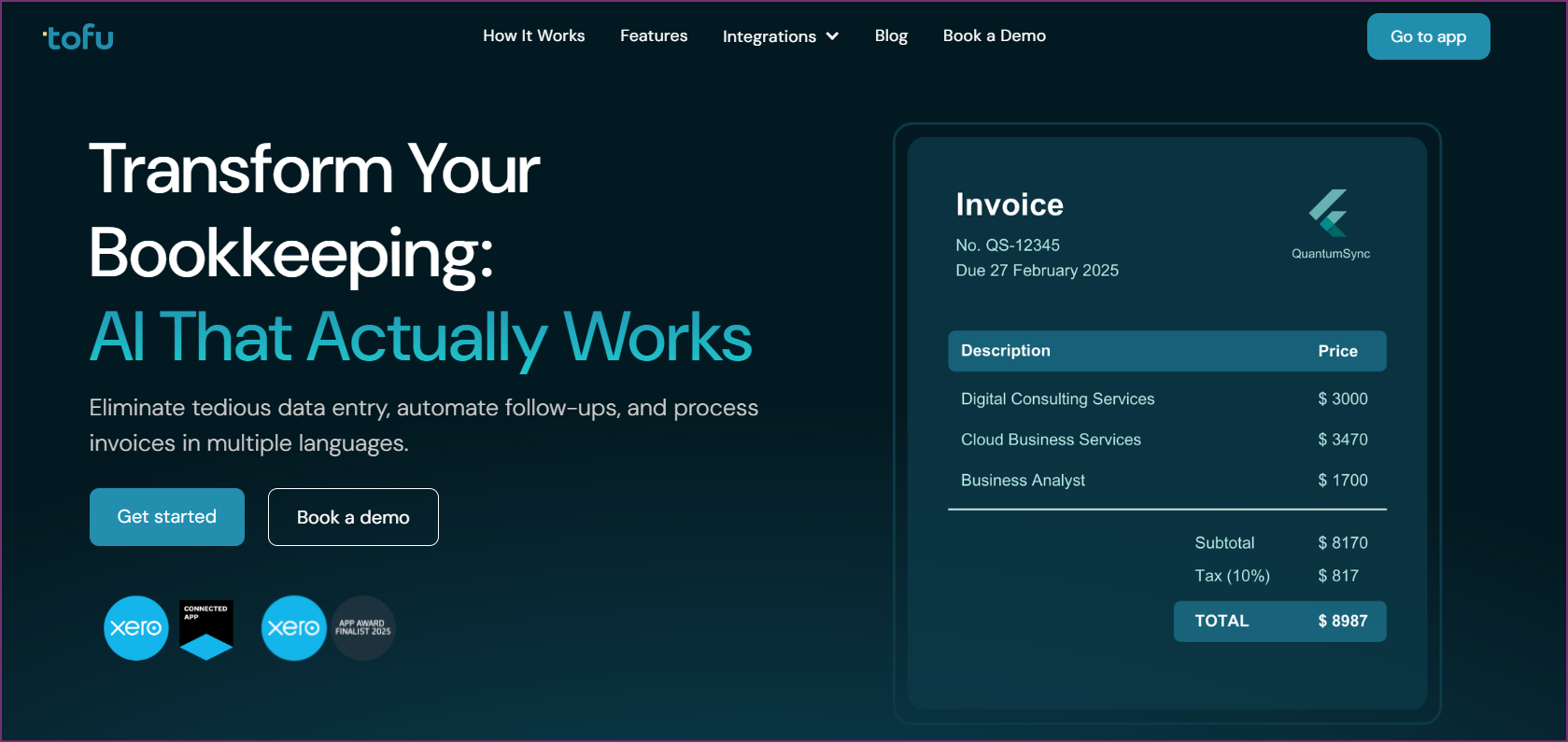
Tofu specializes in AI-powered extraction of structured data from invoices, receipts, and bills across 200+ languages. Unlike Botkeeper's transaction categorization focus, Tofu handles the document intake bottleneck.
Key advantages:
Best for: Accounting firms serving multilingual client bases, practices processing Asian-language documents, firms wanting instant deployment without configuration investment.
Pricing: Starter $79/month, Growth $199/month with entity-based model.
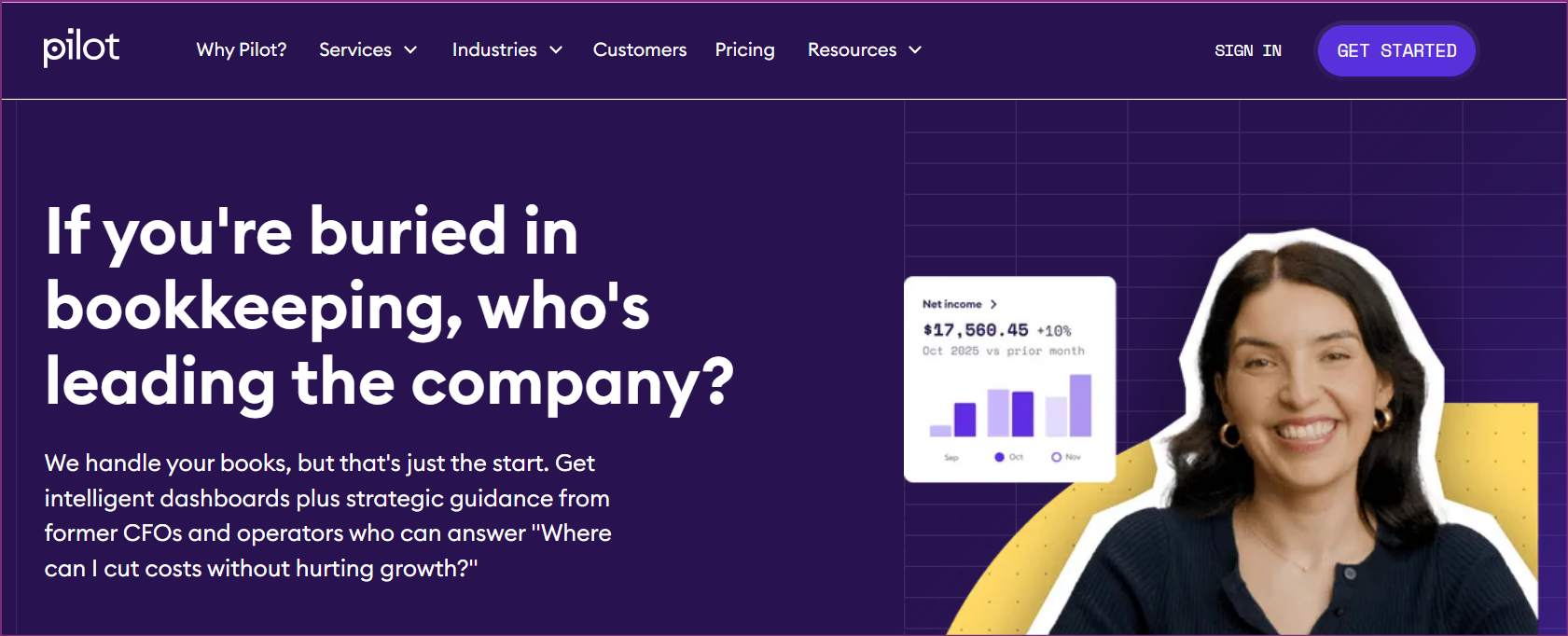
Pilot provides AI-powered software combined with expert bookkeepers and CFO advisors who handle all bookkeeping and deliver strategic financial guidance.
Key advantages:
Limitations:
Best for: Well-funded startups wanting fully managed bookkeeping and CFO advisory without internal accounting staff.
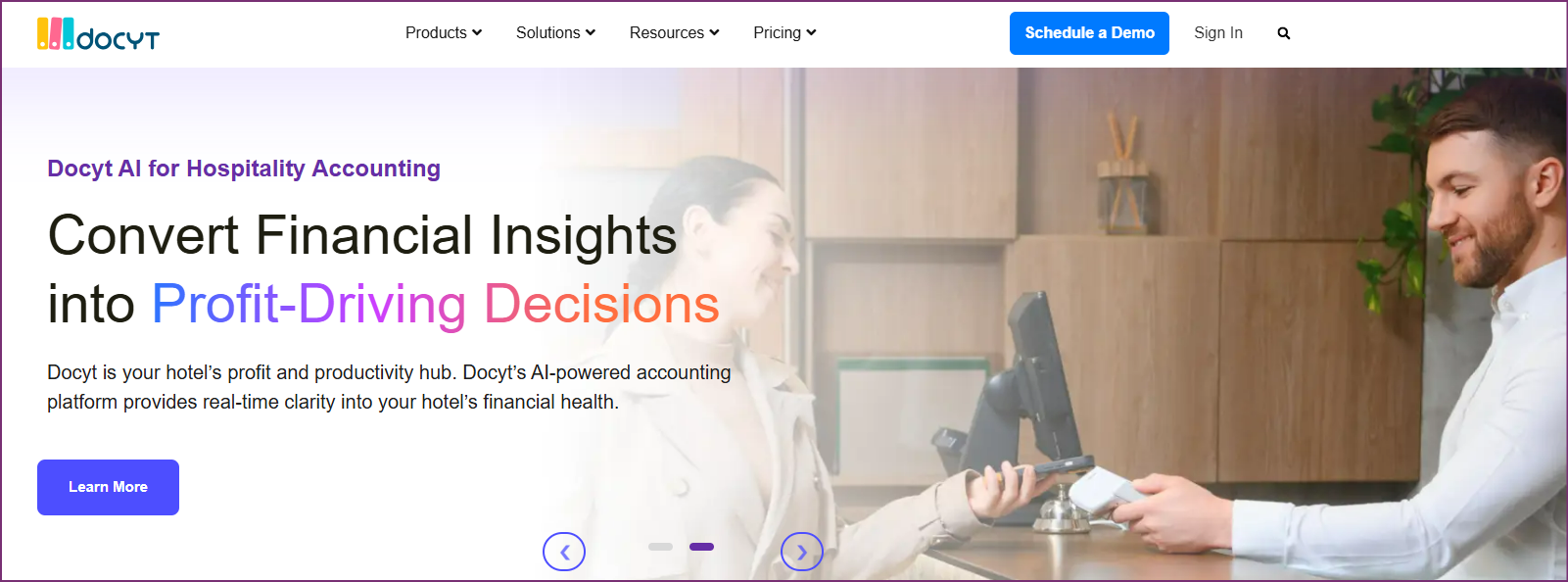
Docyt offers AI bookkeeping automation with a focus on multi-location businesses like franchises, restaurants, and retail chains.
Key advantages:
Limitations:
Best for: Multi-location businesses and franchises, firms specializing in hospitality or retail clients.
QuickBooks Live combines QuickBooks Online software with certified bookkeepers who handle monthly books within the familiar Intuit ecosystem.
Key advantages:
Limitations:
Best for: Individual businesses wanting done-for-you bookkeeping within QuickBooks rather than accounting firms managing multiple clients.
Pricing: Typically $200-$400/month depending on transaction volume.
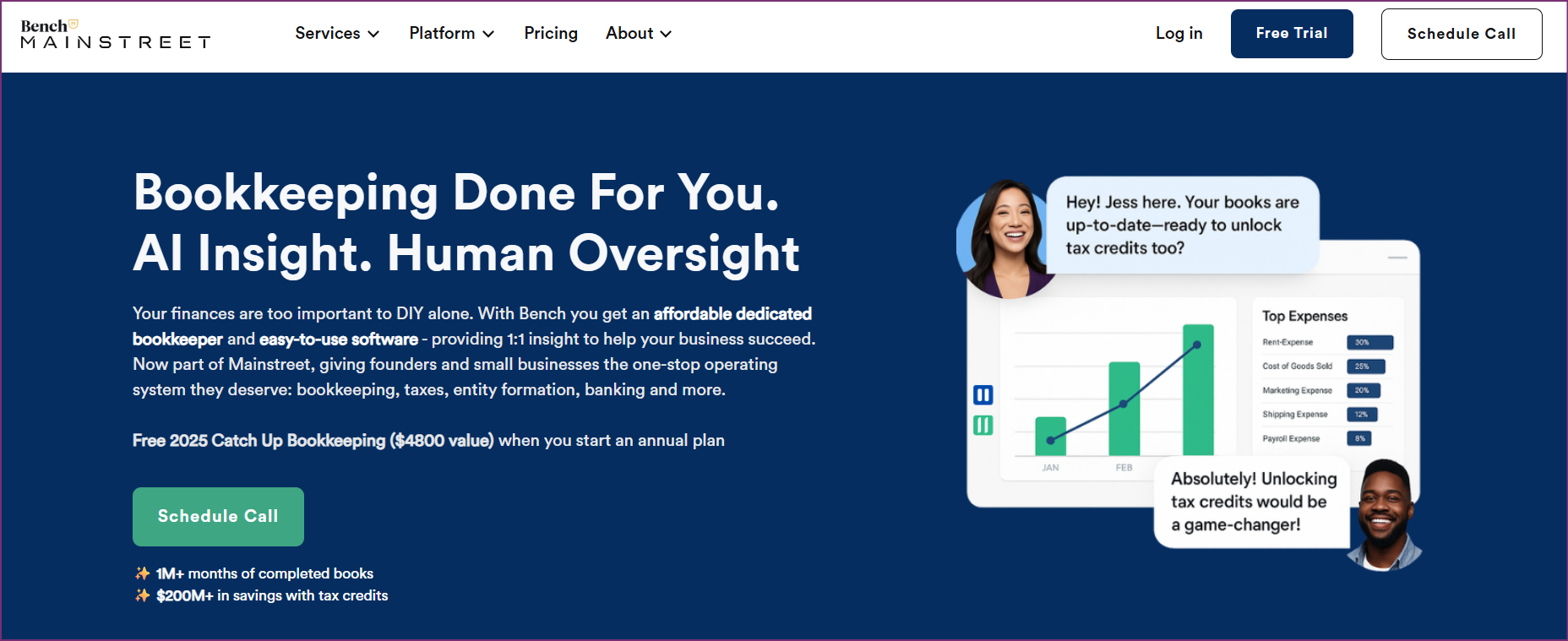
Bench provides human bookkeepers using proprietary software to deliver monthly financial statements without requiring business owner involvement.
Key advantages:
Limitations:
Best for: Small business owners wanting completely outsourced bookkeeping without managing software or staff.
Pricing: Essential $249/month, Premium $399/month, Bookkeeping + Tax $599/month.
Dext (formerly Receipt Bank) specializes in extracting data from receipts, invoices, and bills for bookkeeping automation.
Key advantages:
Limitations:
Best for: Firms needing document capture automation with extensive customization options.
Pricing: Contact for quote; typically per-user pricing model.
Mid-size accounting firms with 20-100+ clients. Botkeeper's pricing sweet spot is firms managing enough clients to justify 10-25 licenses ($490-$1,375/month) while benefiting from capacity increases that delay hiring needs. The scalability allows taking on 20-30% more clients using automation.
Practices drowning in routine categorization work. Firms where senior staff spend excessive time on transaction categorization and bank reconciliation find Botkeeper's AI directly addresses their bottleneck. The 25% time savings compounds across dozens of clients monthly.
Firms seeking offshore replacement with quality control. Practices uncomfortable with offshore bookkeeping quality but unable to afford domestic hiring rates find Botkeeper's hybrid AI-plus-human model provides a middle path. The automation handles routine work while optional US-based bookkeeper services ensure oversight.
Teams willing to invest in onboarding. Firms that can dedicate hours per client to initial setup and AI training will achieve better ROI than those expecting instant plug-and-play deployment. The upfront investment pays dividends through ongoing automation.
English-language, North American client base. Botkeeper optimizes for US and Canadian clients using QuickBooks Online or Xero with standard business transactions. Firms serving this market segment experience fewer workflow exceptions.
Practices valuing dedicated support. Firms that benefit from regular check-ins and guided optimization will appreciate Botkeeper's twice-weekly meetings with customer service representatives. This high-touch model suits practices wanting partnership rather than just software.
Solo practitioners and very small firms. The $149/month minimum for a single license plus setup time investment creates poor economics for practices with only a few clients. The 10-license minimum for bookkeeper services ($490-$550/month) makes those tiers completely inaccessible to small practices.
Firms serving multilingual client bases. Accounting practices with clients processing Chinese, Spanish, Malay, or other non-English documents find Botkeeper's English-only focus limiting. The platform doesn't provide multilingual document processing that international practices require. Tofu serves these firms better with 200+ language support.
Practices with highly customized workflows. Firms serving clients with complex entity structures, specialized industries, or unique accounting requirements encounter Botkeeper's standardization as a constraint. The automation works best for conventional bookkeeping scenarios.
Teams seeking completely hands-off automation. Despite AI-powered features, Botkeeper requires ongoing oversight of flagged transactions, GL error corrections, and bank reconnections. Firms wanting true set-and-forget automation will be disappointed by maintenance requirements.
Budget-conscious practices evaluating total cost. At $39-$149 per license monthly, plus potential service fees of $1,499-$2,999/month, Botkeeper's total cost can exceed full-service alternatives like Bench ($249-$599/month) that include human bookkeepers without minimum license requirements.
Firms prioritizing document intake automation. Practices where the bottleneck is extracting data from client-submitted invoices and receipts rather than categorizing bank feed transactions should explore document processing platforms like Tofu that directly address that workflow constraint.
Botkeeper is an AI-powered bookkeeping automation platform for accounting firms that combines machine learning with optional human bookkeeper services to handle transaction categorization, bank reconciliation, and journal entries. It integrates with QuickBooks Online and Xero to automate routine bookkeeping tasks.
Botkeeper pricing ranges from $39-$149 per license monthly depending on volume. Annual billing: 1 license is $104/month, 5 licenses are $49/month each, 25 licenses are $39/month each. Optional bookkeeper services range from $1,499-$2,999/month with a 10-license minimum ($490-$550/month).
Botkeeper scores 4.4/5 stars on Capterra from 71 reviews, with particularly strong ratings for customer service (4.5/5) and value for money (4.5/5). Users praise time savings and dedicated support but note onboarding complexity and bank connection stability issues.
Key limitations include time-consuming initial setup, occasional AI errors requiring oversight, recurring bank connection breaks, limited customization options, English-only language support, and a 10-license minimum for accessing bookkeeper services that excludes smaller firms.
Botkeeper's economics favor mid-size firms over solo practices. At $149/month minimum plus significant setup time per client, solo practitioners with only a few clients find better value in alternatives like Bench ($249/month) that include human bookkeepers without per-client software fees.
No. Botkeeper focuses on English-language transactions and doesn't provide multilingual document processing capabilities. Firms serving clients with Chinese, Malay, Spanish, or other non-English documents need specialized platforms like Tofu that support 200+ languages with OCR extraction.
No. While Botkeeper automates routine categorization and reconciliation (claiming 97% AI accuracy), it requires human oversight for flagged transactions, error corrections, and complex scenarios. Optional bookkeeper services provide that human layer, functioning as virtual staff augmentation rather than complete replacement.
Botkeeper focuses on transaction categorization and bank reconciliation within QuickBooks/Xero, while Tofu specializes in extracting line-item data from invoices and documents across 200+ languages. Botkeeper suits firms with English-language transaction processing needs; Tofu serves multilingual practices with document intake bottlenecks.
Botkeeper integrates primarily with QuickBooks Online and Xero for accounting software, plus thousands of banks through aggregators for transaction feeds. The integration ecosystem is narrower than competitors but optimized for deep automation with core platforms.
User reviews consistently mention setup being "time consuming and laborious," taking hours to days per client file depending on complexity. Firms with diverse client accounting needs should budget significant initial configuration time, though ongoing automation delivers time savings after onboarding.
Botkeeper delivers meaningful automation for mid-size accounting firms drowning in routine transaction categorization and bank reconciliation work. The 97% AI accuracy on general ledger posts, combined with automated reconciliation and optional human bookkeeper services, genuinely increases firm capacity by 20-30% without proportional hiring.
The platform's strongest assets are dedicated customer support (4.5/5 rating), cost competitiveness versus full-time bookkeepers, and the hybrid AI-plus-human model that builds confidence in automation accuracy. Firms willing to invest upfront setup time achieve substantial ongoing time savings.
However, the significant onboarding investment, recurring bank connection issues, AI errors requiring oversight, and English-only focus create meaningful limitations. Solo practitioners and small firms find the economics unfavorable, while international practices need multilingual capabilities Botkeeper doesn't provide.
The bottom line: Botkeeper works well for mid-size North American accounting firms (20-100+ clients) seeking transaction categorization automation and willing to accept hybrid AI requiring human oversight. The platform scales firm capacity cost-effectively compared to hiring but demands initial configuration investment and ongoing maintenance.
For accounting firms specifically, the choice between Botkeeper and alternatives depends on workflow bottlenecks. If transaction categorization consumes excessive time, Botkeeper directly addresses that pain. If document intake and multilingual processing create constraints, Tofu solves the actual problem more directly with zero-configuration deployment, 200+ language support, and line-by-line extraction from messy documents.
The right choice depends on your specific practice: Botkeeper for North American firms needing transaction automation, Tofu for multilingual practices with document processing bottlenecks, or full-service options like Pilot and Bench for completely outsourced bookkeeping.