Jay Sen Lon
February 15, 2026


Manual bookkeeping drains hours from Philippine accounting firms every week. Receipts in mixed languages, BIR compliance requirements, and clients spread across industries make the workload heavier than it needs to be. The right software cuts that burden significantly.
Tofu tops this list for accounting firms dealing with high document volume and multi-language receipts. For small businesses looking for standalone cloud accounting, Xero and QuickBooks remain strong choices. Wave suits micro-businesses on a tight budget.
Quick Answer: Tofu is the best bookkeeping automation tool for Philippine accounting firms handling multilingual documents, while Xero is the top cloud accounting platform for growing Philippine SMEs.
Transparency Note: This comparison is published on Tofu's website. While Tofu is positioned as the top recommendation for accounting firms, the tools listed here are assessed with objective data - pricing, ratings, and use case fit - so readers can make the best choice for their specific needs.
Bookkeeping software automates the recording, organizing, and reporting of financial transactions. Instead of manually entering figures into spreadsheets or physical ledgers, businesses use these platforms to track income, expenses, invoices, and bank reconciliations in real time.
In the Philippines, bookkeeping software does more than just organize numbers. Philippine businesses are subject to BIR (Bureau of Internal Revenue) regulations, including CAS (Computerized Accounting System) requirements for certain taxpayers, VAT reporting at 12%, and the requirement to issue official receipts or invoices in prescribed formats. The right platform should either support these requirements natively or integrate with tools that do.
Modern bookkeeping tools fall into several categories:
For accounting firms in the Philippines serving multiple clients, document processing tools like Tofu can save dozens of hours per month. For a sole proprietor running a sari-sari store or a small service business, a simple cloud platform may be all that's needed.
The evolution from manual bookkeeping to cloud software happened quickly. What used to require a dedicated bookkeeper or accountant can now be handled largely automatically - provided the software is set up correctly and the inputs (receipts, invoices, bank statements) are fed in consistently.
Any software used for official business accounting in the Philippines needs to support BIR requirements. Look for platforms that generate BIR-compliant reports or integrate with local tax filing tools. If the business is VAT-registered, the software should handle 12% VAT calculations and produce VAT returns in the right format.
CAS registration with the BIR is required for businesses that use computerized accounting. Some platforms are pre-approved by the BIR; others may require separate approval. Confirm compliance status before committing to any tool.
Philippine businesses frequently deal with suppliers and clients across Asia. Documents arrive in Chinese, Japanese, English, and Filipino. A bookkeeping platform that can only process English-language documents will create bottlenecks for firms with international exposure.
Tofu supports 200+ languages, including Chinese fapiao and handwritten documents - a significant advantage for accounting firms handling diverse client portfolios.
Per-user pricing adds up quickly as a firm grows. A platform charging $45 per user per month becomes expensive once you have five or ten accountants. Entity-based pricing (one flat rate per client entity) is often more cost-effective for accounting firms.
If the business already uses Xero or QuickBooks, look for bookkeeping tools that integrate with those platforms rather than replacing them. Tofu, Dext, and HubDoc all connect with major accounting platforms, feeding extracted document data directly into the system.
When something goes wrong, local support makes a difference. Some global platforms have limited support infrastructure in Southeast Asia. Check whether the vendor has a Philippines-based support team or local reseller network.
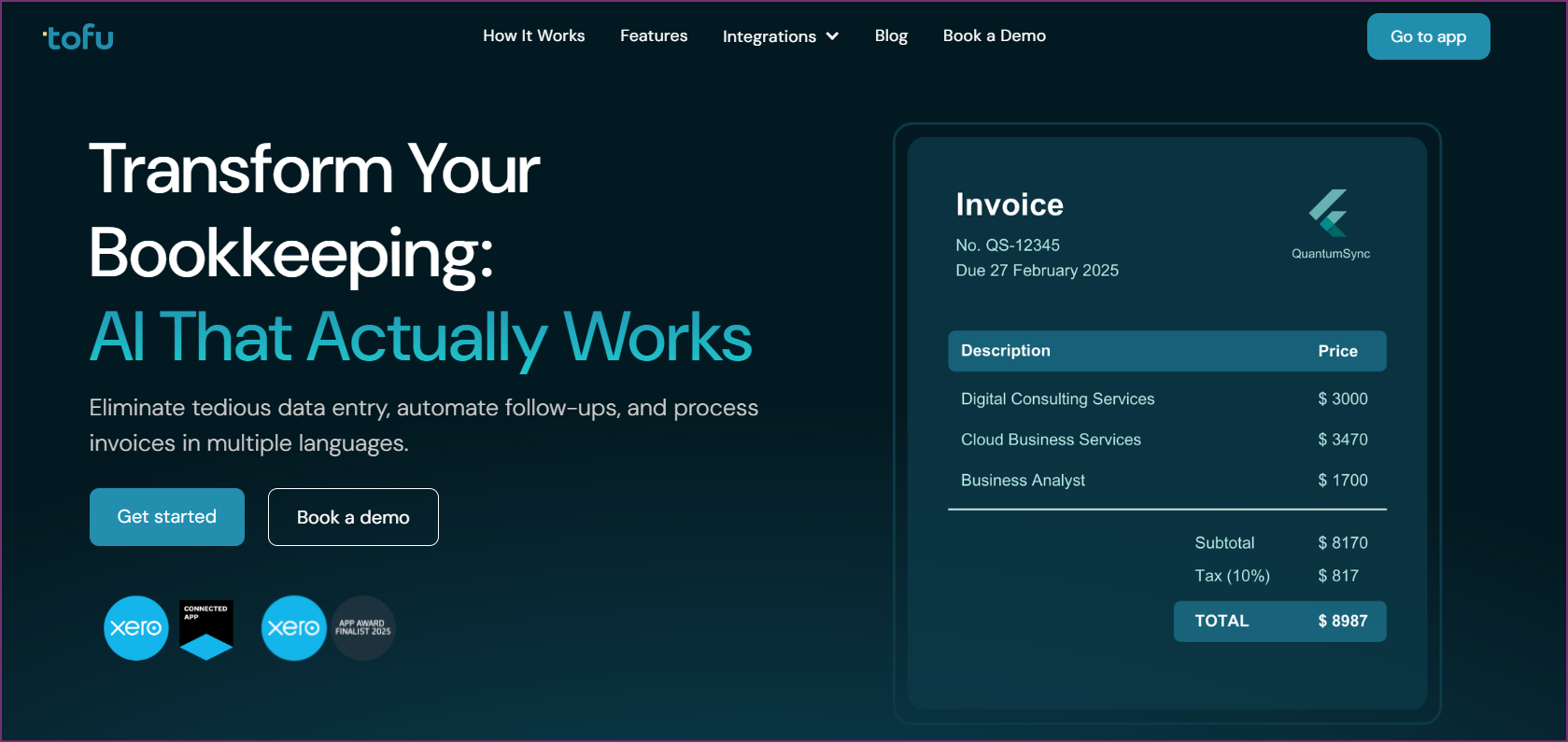
Accounting firms in the Philippines manage clients across industries - retail, manufacturing, services, trading - each producing documents in different formats and sometimes different languages. Tofu was built precisely for this environment: zero configuration, no rules to set up, no templates to train.
Where traditional OCR tools require accountants to configure extraction rules for every new supplier, Tofu processes documents without any setup. Drop in a PDF or scanned receipt, and the system extracts data line by line - not just totals. That distinction matters: line-item extraction means the bookkeeping entries are complete and accurate, not approximated from subtotals.
Firms serving clients with Chinese suppliers - common in Philippine trading and retail - benefit from Tofu's fapiao processing. Most competing tools fail entirely on Chinese-language documents, forcing accountants to enter the data manually. Tofu eliminates that bottleneck.
Tofu serves 7 of the Top 10 Global Accounting Networks, including Baker Tilly, BDO, Mazars, PKF, HLB, Kreston Global, and RSM. That adoption at the top tier reflects confidence in the platform's accuracy and reliability at scale. It was named a Xero Global Emerging App of the Year Finalist in 2025.
For an accounting firm managing multiple clients, Tofu's entity pricing typically works out more cost-effective than per-user alternatives as the team grows.
Accounting firms in the Philippines with international clients, high document volume, or multilingual receipt workflows. The zero-configuration approach makes onboarding new clients fast - no rules to set up per supplier.
Rated 5/5 stars on the Xero App Store. Selected as a Xero Global Emerging App of the Year Finalist 2025.
Xero is one of the most widely adopted cloud accounting platforms in the Philippines. It handles invoicing, bank feeds, payroll, and reporting in a clean, browser-based interface. For growing Philippine businesses that want full accounting functionality without a large upfront cost, Xero is a strong starting point.
Pricing varies by region. HubDoc is included free with all Xero subscriptions - a useful addition for receipt capture.
Philippine SMEs and accounting firms looking for a modern cloud accounting platform with broad integration support.

QuickBooks remains one of the most recognized bookkeeping platforms globally and has a solid user base in the Philippines. It covers the core accounting functions: invoicing, expense tracking, payroll, and reporting. The cloud version (QuickBooks Online) works well for remote teams and multi-device access.
Philippine businesses or accountants already trained on QuickBooks who want cloud access and basic automation.
Rated 4/5 stars on G2.
Wave offers core accounting features at no cost - genuinely free, not a trial. For a Philippine freelancer, solopreneur, or small business with straightforward finances, Wave covers the basics: income tracking, expense recording, invoicing, and bank connections.
Philippine freelancers, home-based businesses, or micro-enterprises with simple bookkeeping needs and no budget for paid tools.
Rated 4.4/5 stars on G2 and 4.4/5 on Capterra.
FreshBooks is designed for service-based businesses: consultants, agencies, freelancers, and professionals who invoice clients and track hours. The interface is straightforward enough for non-accountants to use without training. In the Philippines, where the freelance economy is large, FreshBooks has a natural audience.
Filipino freelancers, independent consultants, and small service businesses that need invoicing and basic expense tracking more than full accounting features.
Zoho Books is the accounting module in the Zoho ecosystem. Businesses already using Zoho CRM, Zoho Inventory, or other Zoho apps benefit from tight integration across the suite. The pricing is competitive, making it accessible for Philippine SMEs on limited budgets.
Philippine small businesses already using other Zoho products, or those wanting affordable cloud accounting with a client portal.
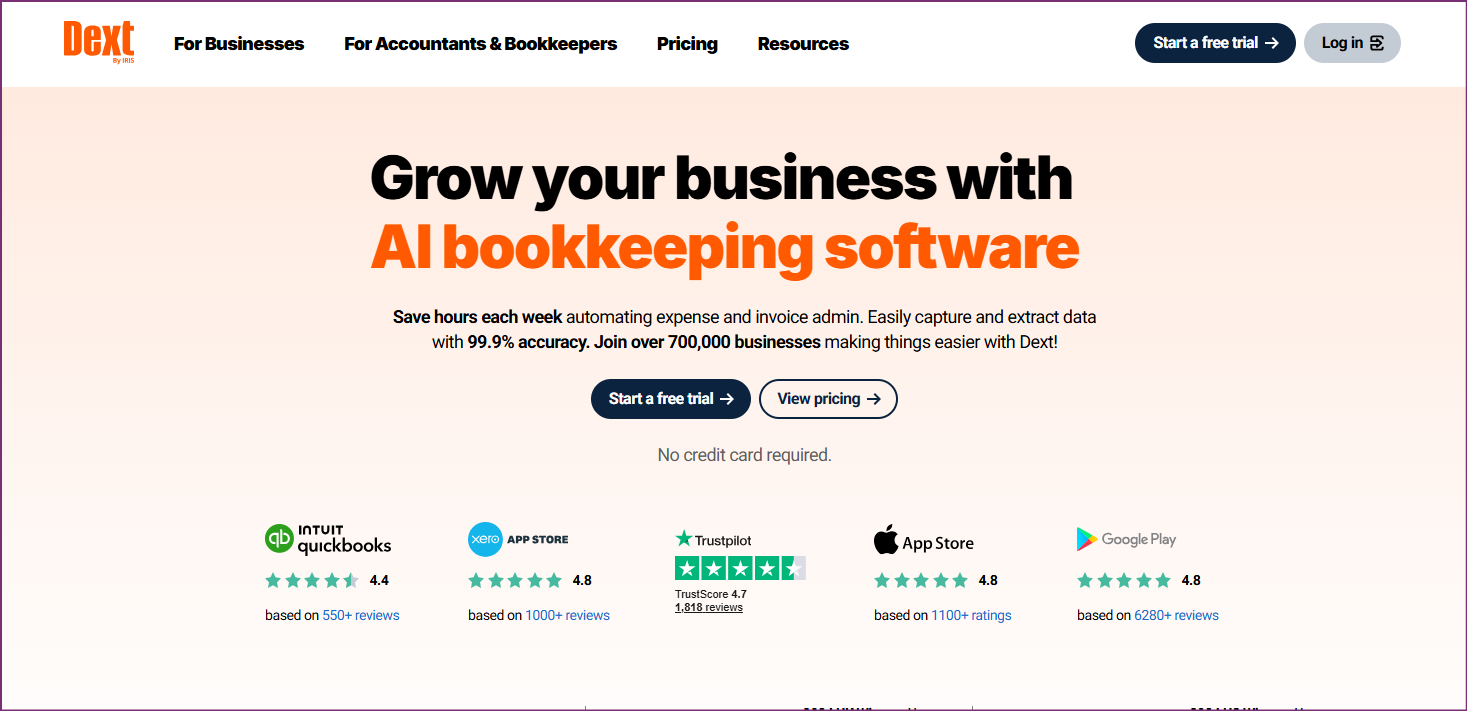
Dext (formerly Receipt Bank) is a document capture and data extraction platform used by accounting firms globally. It collects receipts, invoices, and bills from multiple sources - email, mobile, desktop - and extracts the data for transfer to accounting platforms like Xero or QuickBooks.
Per-user pricing model. Contact Dext for current Philippines pricing.
Accounting firms that primarily handle English-language documents and already have Dext workflows established. For firms with Asian-language documents, Tofu handles that workload better.
Rated 4.3/5 stars on G2 and 4.3/5 on Capterra.
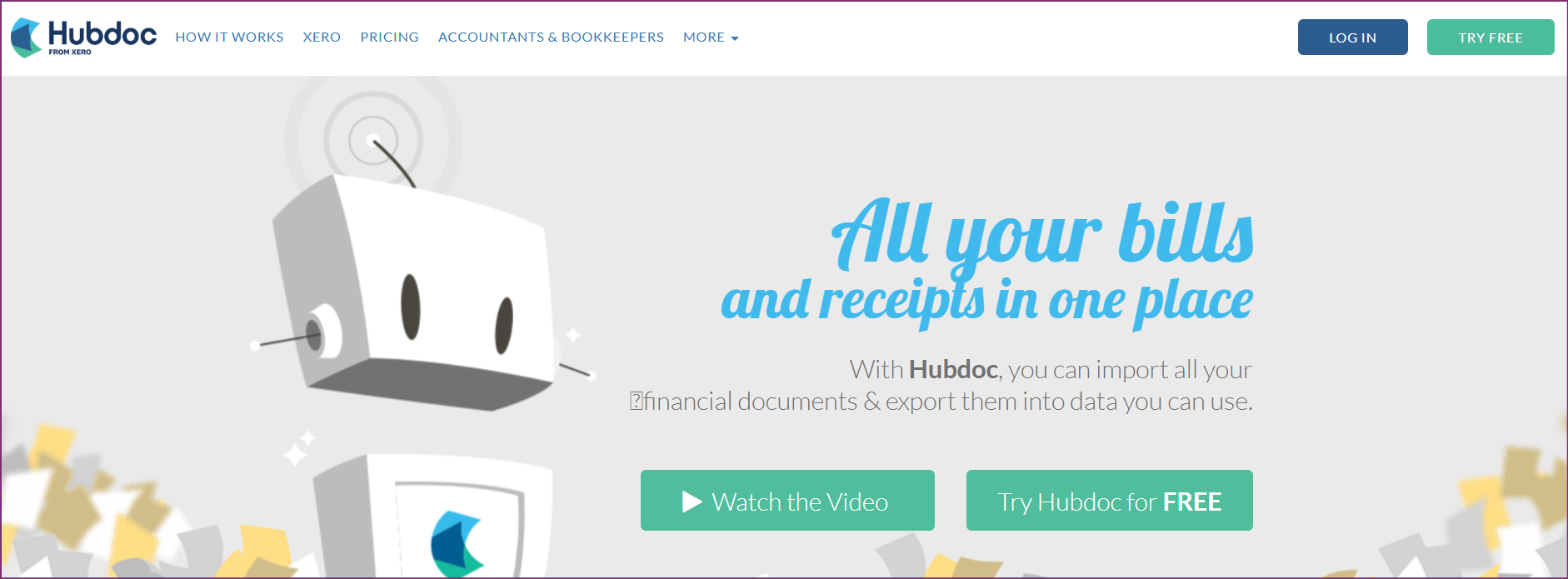
HubDoc is included free with every Xero subscription, making it a low-friction starting point for receipt and document capture. It fetches bills and statements automatically from supported suppliers and banks, reducing manual upload work.
Free with Xero subscription.
Xero users wanting a free, simple document capture tool for English-language receipts. For firms that need line-item extraction or multilingual support, Tofu is the upgrade path.
Rated 4.3/5 stars on G2 and 4.2/5 on Capterra.
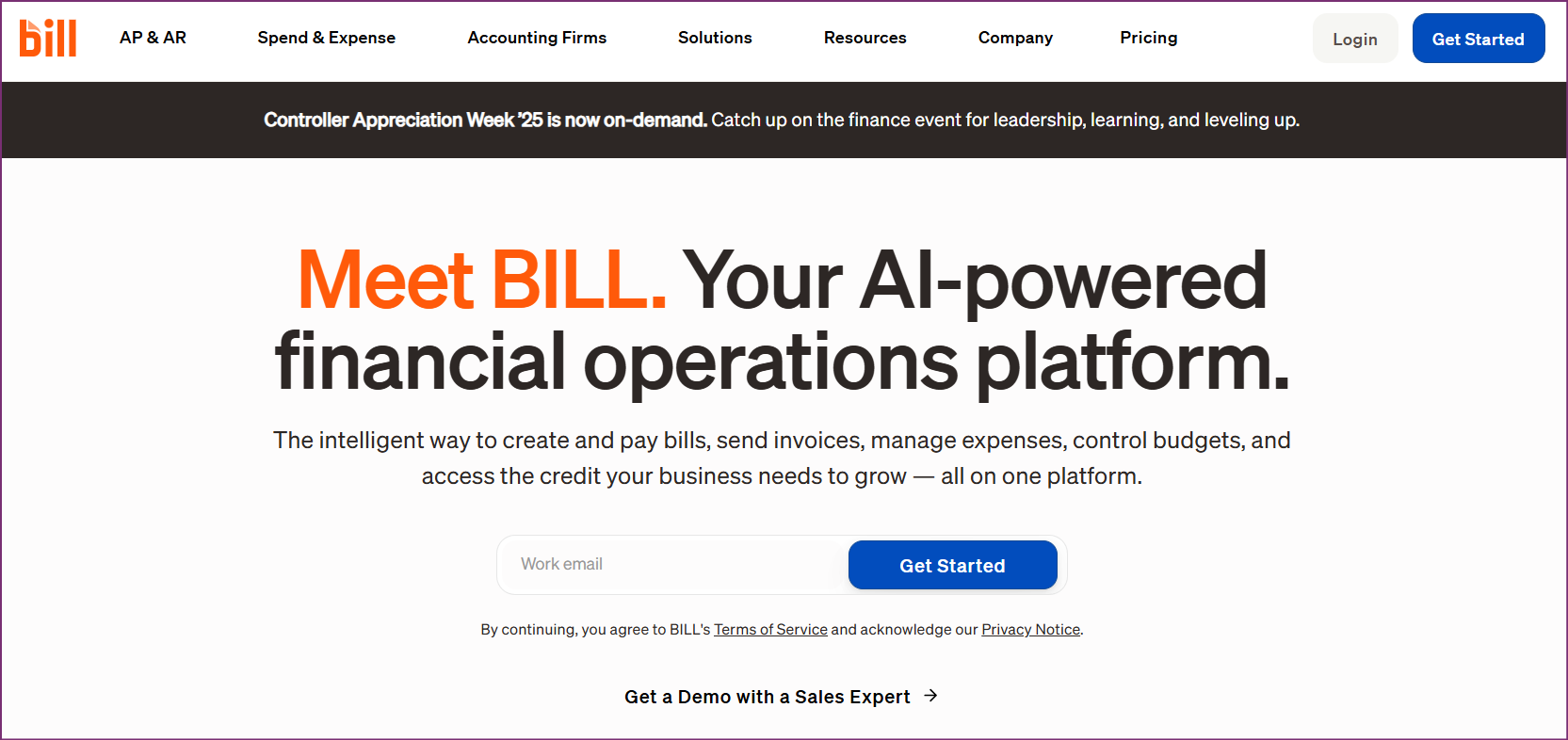
BILL (formerly Bill.com) focuses on accounts payable and accounts receivable automation. It's particularly useful for Philippine businesses making or receiving regular payments to multiple vendors, where manual approval workflows slow things down.
Mid-size Philippine businesses or firms with high AP/AR volume that need structured approval and payment workflows.
Rated 4.4/5 stars on G2.
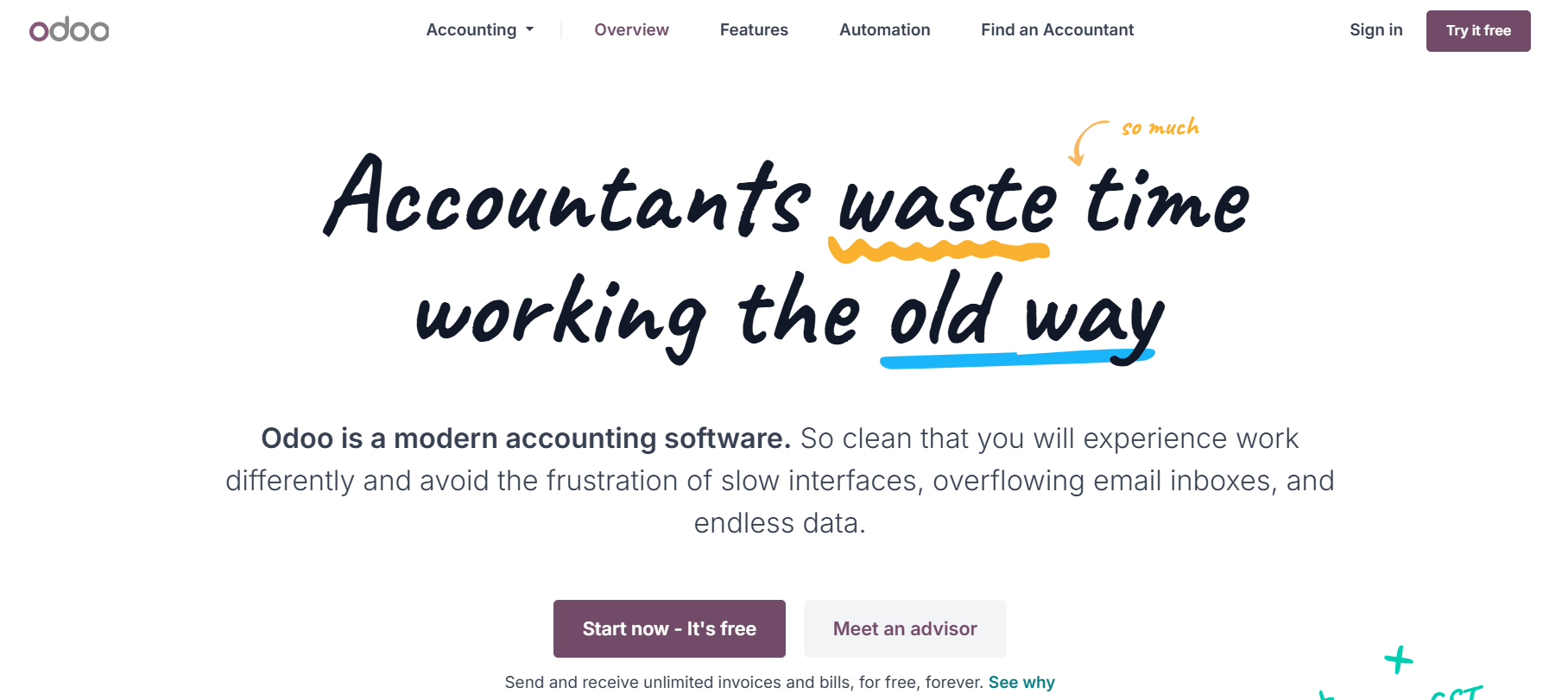
Odoo is an open-source ERP that includes an accounting module alongside inventory, HR, CRM, and manufacturing. For Philippine businesses that need accounting tightly integrated with other business functions, Odoo provides a modular path to building out the full stack.
Philippine businesses that need a full ERP system and want accounting as one integrated module rather than a standalone tool.
Philippine businesses operating as VAT-registered entities or with annual gross sales above the threshold are required to comply with BIR rules on computerized accounting systems. Key compliance points:
None of the platforms on this list are certified by the BIR out of the box for all use cases. Philippine businesses should confirm their specific CAS registration requirements with a local CPA or tax consultant before selecting software.
Philippine businesses are moving away from desktop accounting software faster than most markets in Southeast Asia. Improving internet infrastructure and mobile access have made cloud platforms practical for businesses outside Metro Manila. Small businesses in Cebu, Davao, and Iloilo are increasingly adopting the same tools as Manila-based firms.
The Bureau of Internal Revenue has been pushing digital tax compliance through its eFPS and eBIRForms systems. This trend signals that more digital integration will be expected, not optional, in the years ahead.
Accounting firms in the Philippines face a familiar challenge: rising client numbers without proportional headcount growth. AI document processing tools address this directly. Instead of hiring additional bookkeeping staff to handle data entry, firms can process higher volumes with the same team size.
Tofu's zero-configuration approach is particularly relevant here. Traditional OCR tools require setup time per supplier - a cost that adds up when onboarding new clients. A tool that processes any document from any supplier without prior configuration removes that bottleneck entirely.
The Philippines imports heavily from China, Japan, South Korea, and other Asian markets. Supplier invoices and purchase orders often arrive in languages other than English or Filipino. Philippine accounting firms that serve import-heavy businesses need document processing tools that can handle this diversity without manual re-keying.
This is where most general-purpose accounting platforms fall short. Tofu's 200+ language capability directly addresses what has historically been a significant manual workload for Philippine bookkeeping teams.
For small businesses with simple needs, Wave is free and covers basic bookkeeping. For businesses that invoice clients regularly, Xero or FreshBooks offer more complete features at affordable prices. Accounting firms handling multiple clients benefit most from adding Tofu for document automation.
Businesses using computerized accounting systems are required to register with the BIR under its CAS (Computerized Accounting System) regulations. The specific requirements depend on business size and registration status. Consult with a Philippine CPA or tax professional to confirm what applies to your business.
Bookkeeping software focuses on recording transactions - income, expenses, receipts, and invoices. Accounting software typically includes broader features: financial reporting, tax calculations, payroll, and multi-entity consolidation. Many modern platforms combine both. Document processing tools like Tofu focus specifically on automating the data entry part of bookkeeping.
Xero handles core accounting functions well but is not a BIR-certified system by default. Philippine businesses may need to work with a local CPA and possibly supplementary tools for BIR-specific reporting requirements.
Tofu supports 200+ languages including Filipino, Chinese, Japanese, and Arabic - making it the strongest option for Philippine accounting firms with multilingual document workflows. Most other tools on this list are limited to English-language document processing.
Prices range from free (Wave) to enterprise-level custom pricing. For cloud accounting, expect $15-80/month for SME-focused tools. For document automation at the accounting firm level, Tofu starts at $79/month with entity-based pricing that covers the full team.
Reputable cloud platforms use bank-grade encryption and comply with international data security standards. Check each provider's data residency policies - some store data in US or European data centers. For businesses with data residency concerns, verify where your data is stored before committing to a platform.
Philippine businesses and accounting firms have more bookkeeping software options than ever. The right choice depends on what you're actually solving for.
If the main pain point is document volume and multilingual receipts - which is common in the Philippines given trade ties with China, Japan, and other ASEAN markets - Tofu addresses that directly. Zero-configuration AI, 200+ language support, and entity-based pricing make it the practical choice for accounting firms scaling their client base.
For standalone cloud accounting, Xero remains the leading option for Philippine SMEs wanting full accounting functionality with a broad integration ecosystem. QuickBooks suits businesses with existing Intuit workflows, and Wave works for micro-businesses on zero budget.
Start with your biggest pain point. If it's manual data entry from receipts, Book a Demo with Tofu and see what zero-configuration document processing looks like for your firm.